
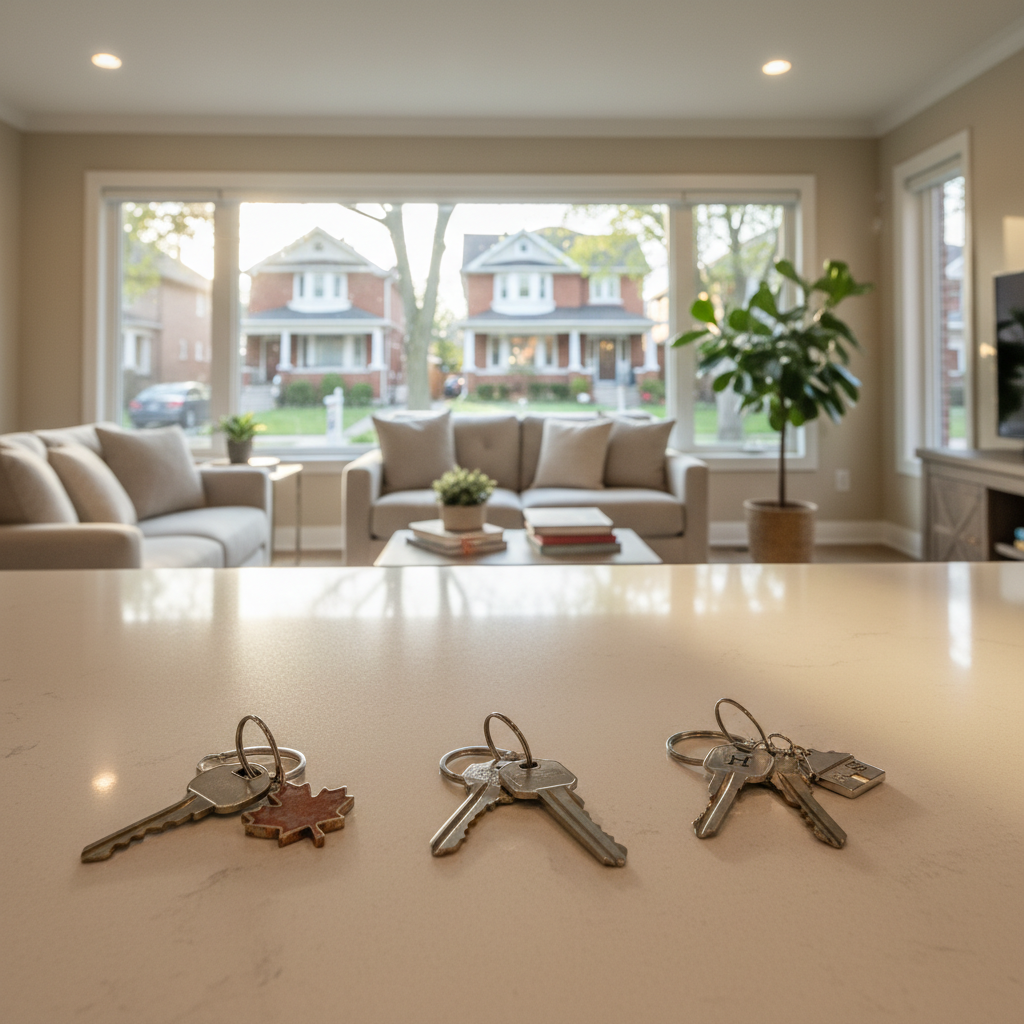
A Hamilton landlord with three units should hand the work to a property manager when one empty month starts to cost more than the help would. In the twelve months to October 28, 2026, the median asking rent for a self-contained unit in Hamilton was $1,800 a month, and it took a median of 15 days to rent one out, according to our Hamilton rental and sales market report. Three doors is usually where that line gets crossed, because move-outs start to pile up.
I'm Ana Marin-Suarez. I'm a Realtor with Found Spaces, and I'm Director of Operations at Found Spaces Property Management, which looks after more than 600 rentals across Hamilton, Burlington and nearby. So I have a side in this. That's exactly why I'll also tell you when you should keep doing it yourself.
Why three doors is where it usually tips
One unit is a side job. Two is still a side job. Three is where the jobs start landing on top of each other.
The reason is turnover. That means a tenant moves out and a new one moves in. With one unit, it might happen once every few years. With three, odds are good it happens most years, and some years it happens twice. When it happens, you clean, fix, take photos, post the ad, book showings, check renters, sign a lease and collect a deposit, all while the unit earns nothing and your day job keeps going.
It doesn't matter much whether your three doors are a duplex plus a small house, a triplex, or three condos across the city. What matters is how many move-outs you face, and how fast you can fill the space again.
My view: three doors is not the trigger on its own. The second empty unit in the same year is.
What one empty month costs on Hamilton rents
This is the number I want every landlord to know cold.
Here's the median asking rent and the median days to rent, for the twelve months to October 28, 2026, from our Hamilton market report:
- Self-contained unit (an apartment or 1 to 2 bedrooms in a house): $1,800, 15 days
- Three-bedroom-plus house: $2,600, 12 days
- Townhouse: $2,750, 6 days
These are asking rents from listings. They are not signed leases. Still, they tell you the size of the risk.
Half a month empty on an $1,800 unit is about $900 gone. That's the median. If you can only do showings on Saturdays, or you take two weeks to fix the floors after a move-out, those 15 days can quietly turn into 45, and now one unit has cost you well over a full month of rent before anyone signs anything.
There's a second reason this matters right now. In September 2026, Hamilton had 333 home sales, down 27% from a year earlier, with homes taking 44 days to sell on average and 2,557 homes for sale. Some tired landlords tell me they'll just sell. That road is slower today than it was a year ago. For a lot of owners, getting help with the work is the better fix than leaving.
Screening is where landlords on their own get hurt
The rules for picking a tenant in Ontario are clear, but they're easy to break by accident.
You can ask about income, work, past landlords, and you can run a credit check if the renter says yes in writing. You can't turn someone down because they have kids, because of where they're from, or because part of their income is social assistance. The Ontario Human Rights Code protects all of those.
I also see landlords pass on good renters because there's no Canadian credit score. Newcomers often have none yet. A job letter, bank statements and a reference from a landlord back home can tell you more than a score would.
One small thing about how I work. When I call a renter's last landlord, the question I always ask is: would you rent to them again? The pause before the answer tells me a lot.
Then there's the lease. Most rentals in Ontario must use the Ontario standard lease, the province's official form. A homemade lease with extra rules can leave you with terms you can't enforce. And if a tenancy goes wrong, a case at the Landlord and Tenant Board (the province's rental court) can take a long time. I won't put a number on it, because it changes. Good screening is the cheapest way to stay out of there.
What management costs, and what to get in writing
I'm not going to quote a fee here. Prices differ, and a number in a blog post is not a promise.
What I can tell you is how fees usually work. Most managers charge a share of the monthly rent. Many add a separate fee when they find a new tenant. Some add charges for repairs or for going to the board.
Ask for all of it in writing, and ask these:
- Who answers a call about a leak at 2 a.m.?
- How much can they spend on a repair without asking you first?
- How often do they visit the unit?
- Who goes to the Landlord and Tenant Board if rent stops?
Then put the yearly fee next to one empty month on your unit. On an $1,800 unit, if good help saves you even a few weeks of empty time a year, plus a few bad nights, the math often works. If it doesn't, keep going on your own. That's a fine answer too.
Our underwriting standard shows the share of rent we set aside for running costs, including management, so you can test your own numbers the same way we do.
The halfway step most landlords skip
You don't have to hand over everything.
Picture a landlord with a duplex and a small house on the Mountain, working night shifts at the hospital. Two of the three units empty out the same summer. She posts the ads herself, can only show on weekends, and each unit sits for about a month, which, at a round $1,800 each, is roughly $3,600 she never gets back. The next time, she keeps the fixes she likes doing and hands off only the leasing: the ad, the showings, the screening and the lease. The units fill faster, and she still feels like the owner.
That's a real choice. Leasing is the part where speed and the rules matter most. Maintenance is the part many owners actually enjoy, or have a trusted handyman for. Start with the job that costs you the most when it goes slowly.
A test you can run this month
Sit down for twenty minutes with last year's records. Write three things:
- How many days each unit sat empty.
- About how many hours you spent on tenant calls, showings and repairs.
- Every time you lost sleep over a rental.
If you can't name the empty days, that alone tells you something. You can't manage what you don't track.
If the empty days times your daily rent beats what help would cost, hand off at least the leasing. If not, stay hands-on and look again after your next move-out. For more on running and growing a small portfolio here, see our guide to Hamilton investment properties and the numbers behind them.
Questions people ask
Can a Hamilton landlord ask for a damage deposit?
No. In Ontario, a landlord can ask for a rent deposit of up to one month's rent, used for the last month. You can also ask for a key deposit, but it must be paid back when the keys come back. Each year, you must pay the tenant interest on the rent deposit, at the same rate as that year's rent increase guideline.
Do I have to use the Ontario standard lease for a basement unit in my house?
In most cases, yes. The big exception is when the tenant shares a kitchen or bathroom with you, the owner, or your close family. In that case, the Residential Tenancies Act usually doesn't apply. A basement unit with its own kitchen and bathroom needs the standard lease.
Can I switch to a property manager in the middle of a lease?
Yes. The lease stays exactly the same, and so do the tenant's rights. You just need to tell the tenant in writing who to pay rent to and who to call for repairs. A good manager will send that letter for you on day one.
Talk it through before you decide
If you own three doors in Hamilton and you're not sure whether to keep going alone, hand off the leasing, or hand off everything, let's look at your real numbers together. Book a short call with our team and bring last year's empty days.
En español
Si tiene tres unidades en Hamilton, el momento de pasar el trabajo a un administrador llega cuando un mes vacío le cuesta más que la ayuda. En los doce meses hasta el 28 de octubre de 2026, una unidad independiente en Hamilton pedía una renta mediana de $1,800 al mes y tardaba 15 días en alquilarse. No tiene que entregar todo: muchas veces basta con delegar la parte de buscar y evaluar inquilinos. Este mes, anote cuántos días estuvo vacía cada unidad el año pasado. Luego escríbame en mi página y lo revisamos juntos, en español.