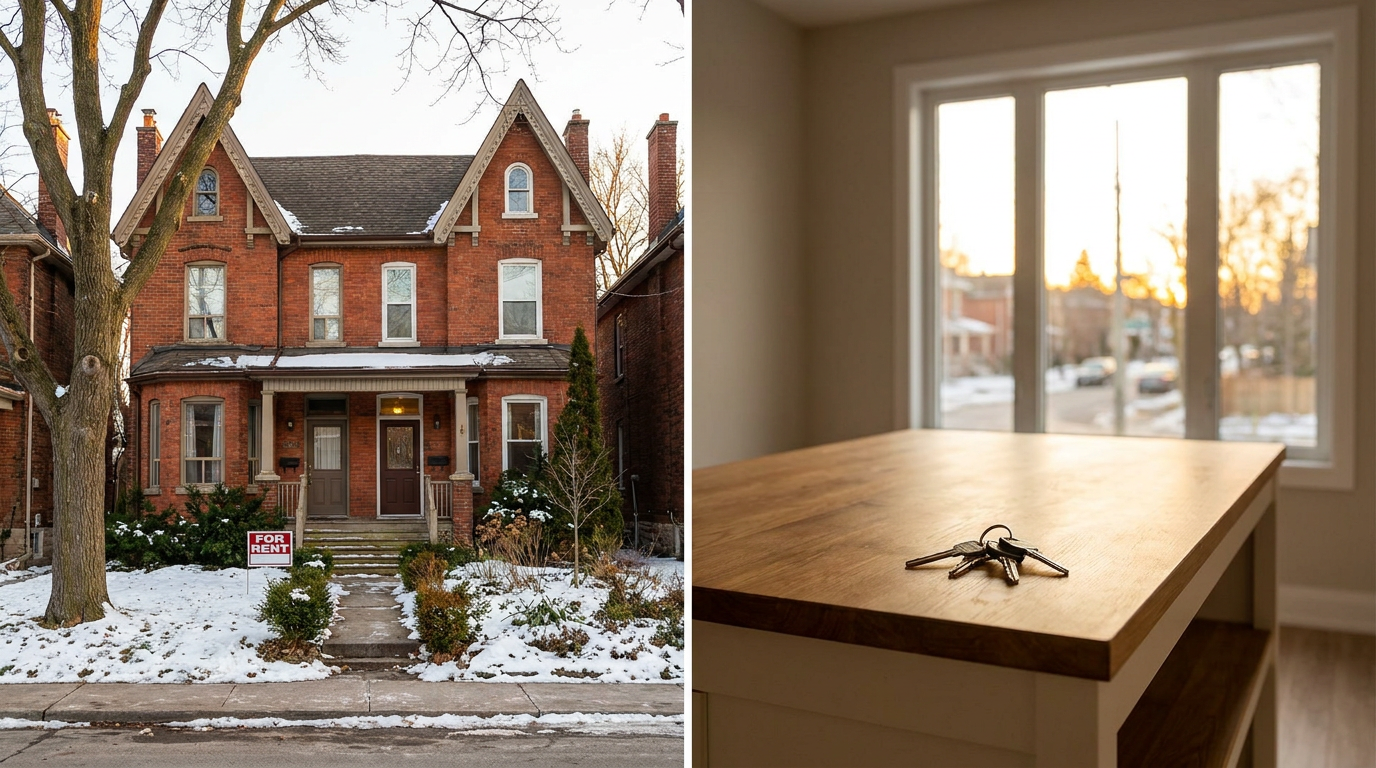
Yes. In most Hamilton houses with a legal second unit, two homes bring in more rent than one. In the twelve months to October 14, 2026, the median asking rent for a three-bedroom-plus house in Hamilton was $2,625, and a self-contained unit asked $1,800, according to our Hamilton market report with this month's rents.
So the basement alone asks about 69% of what the whole house asks, and the upstairs only has to rent for more than $825 a month for the two-unit setup to beat the one big lease. I have not seen a decent main floor in this city ask anything close to that low.
I'm Ana Marin-Suarez. I'm a Realtor with Found Spaces and Director of Operations at our property management company, and I spend my weeks renting out houses and units for Hamilton landlords. My view is plain: if the second unit is legal and livable, I'd rent it as two homes almost every time. There are real costs, and I'll walk through them, because the extra rent is only worth it if you see them coming.
The math from this month's Hamilton rents
The two numbers that matter are the house and the unit. A three-bedroom-plus house: $2,625 median asking. A self-contained unit, which means an apartment-style space or one to two bedrooms in a house: $1,800 median asking. Both are for the twelve months to October 14, 2026.
I don't have a clean median for a main floor alone, since the data doesn't split it out, and I won't make one up. What I watch instead is the gap. The upstairs of a house usually has the kitchen, the living room and two or three bedrooms. That is a real home. It just needs to clear $825 to come out ahead.
Stoney Creek shows the same thing. In the twelve months to October 13, 2026, a three-bedroom-plus house there asked $3,000 and a self-contained unit asked $1,800. That leaves a $1,200 gap for the upstairs to cover, and it still comes out ahead in most homes I see.
One honest note. These are asking rents from lease listings on both boards. They are not signed leases. Some places rent for less than they ask, and a few rent for more.
The takeaway: in Hamilton this month, a legal basement unit on its own asks about two thirds of what a whole house asks, so the upstairs is mostly extra income.
Why two smaller homes find more renters
A big house rents to one kind of person. That's usually a family with steady income who wants three bedrooms and a yard. That's a good tenant, but it's a narrow group.
A basement unit and a main floor rent to two different groups at once. The unit suits a single nurse, a couple, a student in grad school, or a newcomer who just landed and needs a place near a bus line. The main floor suits a small family or two roommates who don't need a third bedroom. Many of the renters I help, especially newcomers without Canadian credit yet, can't stretch to $2,625 for a whole house, but they can carry $1,800 for a unit, and they will treat it like the home it is.
Smaller rents also mean each tenant has a smaller bill to pay. When rent fits the income, people stay longer and pay on time. That matters more to me than squeezing out the top dollar.
Picture a three-bedroom bungalow with a legal basement unit that has been rented to one family for years. The family moves out, and the owner plans to list the whole house again. Then they run the numbers: the basement alone could ask around $1,800, and the upstairs only needs to clear $825 to beat the old single rent. They list it as two homes instead, and the same house, with the same roof, in this illustrative case brings in far more rent each month, with two smaller leases that are each easier for a tenant to afford.
What the second door costs you
Two homes means two of everything. Two leases, two move-outs, two sets of keys, two people calling you when the hot water stops.
Units also take a little longer to lease. In the twelve months to October 14, 2026, a Hamilton house took 11 days to lease at the median, and a self-contained unit took 14. Three extra days is small. But it can happen twice a year if both tenants leave, so I budget for two turnovers, not one.
Utilities are where most landlords lose money without noticing. If the house has one hydro meter and one gas meter, someone has to pay them, and a vague split like "basement pays 40%" starts more fights than anything else I deal with. If you can't separate the meters, write the exact split into each lease, or include utilities in the rent and price it in.
Wear goes up too, with two kitchens, two bathrooms, and more people on the stairs, so put a real number on repairs before you decide. Our Hamilton investment property guide is where I send landlords to see how we think about running costs on a house like this.
Even after all of that, the gap between $2,625 and two rents usually covers it with room to spare.
Legal first, or none of this counts
Everything above assumes the second unit is legal. A basement with a stove and a side door is not automatically a legal unit, and a lot of Hamilton listings blur that line. If you're not sure what you have, read how to tell if a Hamilton second unit is legal before you list it.
One small thing I do on every one: before I list a second unit, I ask the owner for the building permit and the final inspection in writing. Not a verbal "yes, it's legal." The paper. If they can't find it, we pause and sort it out first.
That paper protects you with your insurer, with the city, and with your tenant, and it also makes the unit easier to rent, because good tenants ask more questions than they used to.
If you're buying a house to do this, the price side is softer than it was. In September 2026, Hamilton's average freehold sale price was $659,721, down 10% from a year earlier, per the same Hamilton report. A lower price with the same rents is a better starting point for a two-unit plan.
Screening two tenants under one roof
These two people share a house. They hear each other's footsteps. So I screen both with the same care, inside the Residential Tenancies Act and Ontario's Human Rights Code.
For each applicant I look at credit, income, employment, references and payment history. You can't refuse someone because they have kids, because of where they're from, or because they're on social assistance. You can choose the applicant whose file shows they can pay and will look after the place.
For newcomers without a Canadian credit score, I look at other proof. A job offer, bank statements, references from a past landlord back home. A missing score is not a bad score.
Each unit gets its own Ontario standard lease. Each tenant rents only their unit. Spell out any shared spaces, like laundry or the yard, so nobody argues about who gets Saturday morning in the laundry room.
When to hand the work to someone else
One house, one tenant, you live nearby: plenty of owners do it themselves. Two units doubles the calls, the paperwork and the turnover. If you work full time, live out of town, or own more than one of these, that's usually when it's time to look at management. Our property management company, Found Spaces Property Management, manages more than 600 rental properties across Hamilton, Burlington and the region, so this is the work we do every day.
If you're still deciding, start by tracking one month of your own time. Count every text, repair and showing. That number tells you more than any advice I could give.
Questions people ask
Can a Hamilton landlord ask for a damage deposit?
No. In Ontario, a landlord can ask for a rent deposit of no more than one month's rent, used for the last month. You can also ask for a key deposit, but it must be refundable. Each year you owe the tenant interest on the rent deposit, at the same rate as the rent increase guideline.
Do I need a separate lease for each unit?
Yes. Each unit needs its own Ontario standard lease with its own tenant names, rent and terms. One lease for the whole house with two households on it makes both tenants share the rent and the risk, which causes trouble if one of them leaves.
What if my basement unit isn't legal yet?
The tenant still has rights under the Residential Tenancies Act, so you can't just ask them to leave because the unit isn't legal. Your insurer may refuse a claim, and the city can order changes. Fix the paperwork before you rent it, or before the next turnover if it's already rented.
Find out what your house could rent for
If you own a Hamilton house with a second unit, or one that could have one, start with what the property is worth today. Get your instant home evaluation, then bring me the number and we'll look at the rent side together, unit by unit.
En español
Sí, en Hamilton una casa con una segunda unidad legal casi siempre rinde más rentada como dos viviendas que como una sola. En los doce meses hasta el 14 de octubre de 2026, una casa de tres habitaciones pedía una mediana de $2,625 al mes, y una unidad independiente pedía $1,800. El piso de arriba solo tiene que rentarse por más de $825 para que salga ganando. Antes de anunciarla, asegúrese de tener por escrito el permiso de construcción y la inspección final de la unidad. Si quiere que revisemos su casa juntos, o si busca un lugar para rentar en Hamilton, escríbame aquí.