
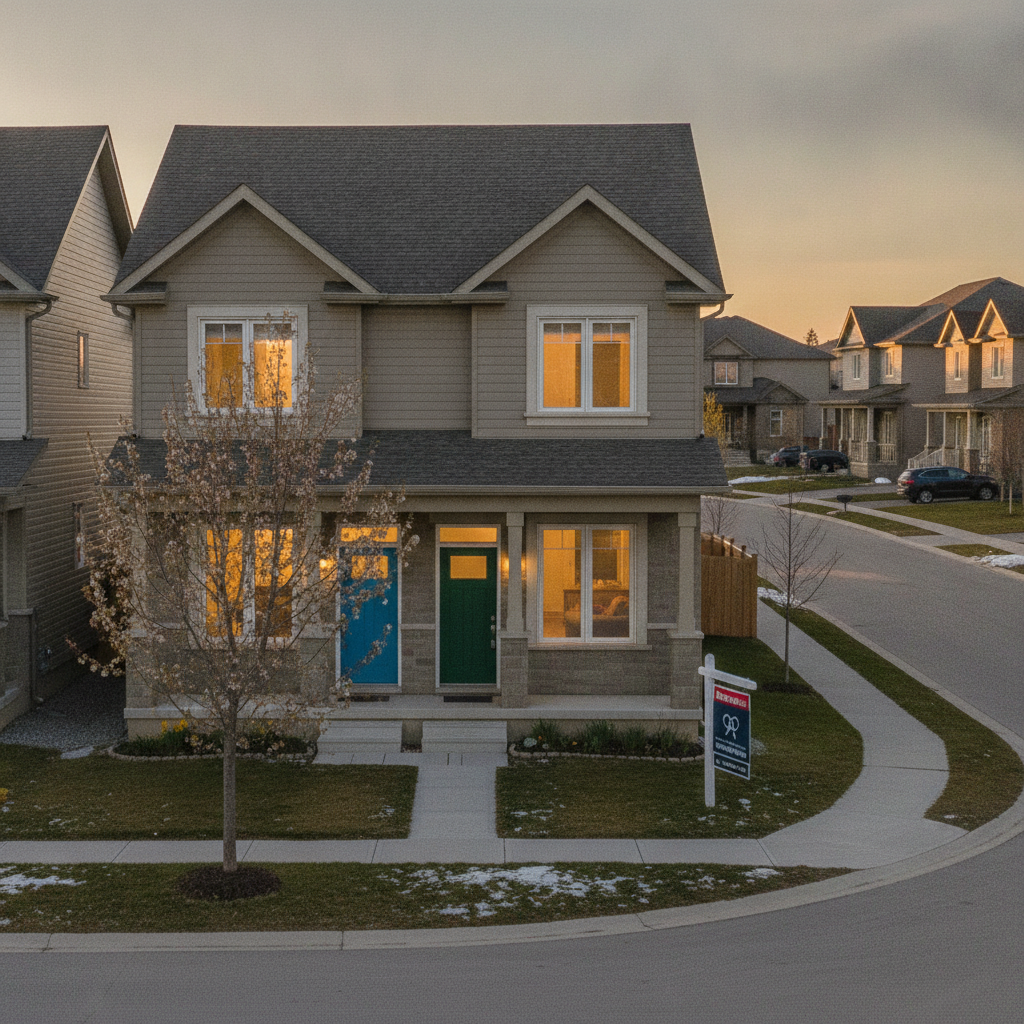
This week we closed on strategy for two first-time buyers, and the lesson is timing: lock in your lender's rent-offset percentage and your contractor's firm quote before you remove financing conditions, not after. Both buyers are purchasing houses with secondary suites, using that rental income to help carry the mortgage, and one is also running a purchase plus improvements program with our construction and lending partners. The buyer who did the paperwork early got the deal to work. The lesson applies to anyone considering the same route this fall.
None of this is rare on its own. What is worth talking about is the timing rule that made one of those deals actually work.
Buying With a Suite Is Not Free Money, It's a Financing Tool
A legal or registerable secondary suite lets a lender count a portion of expected rent toward your income when you apply for a mortgage. That is the real benefit. It is not a guarantee of a cheque landing in your account the day you close.
First-time buyers who get this right treat the suite as part of the underwriting, not part of the daydream. They ask the lender exactly what percentage of rent will be added to their qualifying income before they fall in love with a listing. That number varies by lender and by whether the suite is already tenanted or vacant. Get it in writing early. It changes what you can actually afford, sometimes by a lot.
This is also why Hamilton investment properties with legal duplex zoning keep showing up in conversations with newer buyers. The city has more of that stock at a price point Burlington doesn't offer yet, and it gives a first-time buyer a real shot at a mortgage they couldn't carry alone. For context, a Hamilton duplex, up and down carries a median asking price of $749,900, or $374,950 per unit, according to our Hamilton duplex, triplex and fourplex report, which is the kind of number a lender and a buyer both need to see before conditions come off.
The Purchase Plus Improvements Piece Nobody Mentions Until It's Too Late
Here is the part that trips people up. Purchase plus improvements financing lets a buyer roll renovation costs into the mortgage, so you're not paying contractors out of pocket after closing. Sounds simple. It isn't, if you wait too long to plan it.
The lender needs a firm scope of work and a contractor quote before you remove your financing condition, not after. That means the buyer we worked with this week had to sit down with our construction partners while the deal was still conditional and lock in exactly what was being built, room by room, dollar by dollar. No vague renovation budget. A real number, tied to a real contractor, submitted to the lender for approval.
Skip that step and go firm anyway, and you're stuck financing the reno yourself out of pocket later, which defeats the entire point of the program. The buyer who did this right this week is getting real value added to the property, financed properly, with the numbers locked before they ever waived conditions. That's the difference between using the program and just hearing about it.
Why This Matters More When There's Competition
One offer that got presented in person in Burlington this month came down to who could actually show up and move with confidence. The same logic applies here. A buyer whose financing, contractor quotes, and suite income numbers are already sorted before they write an offer can move faster and with more certainty than a buyer still figuring out the math mid-negotiation.
We wrote about that exact dynamic in the last time an offer got presented face to face in Burlington. Preparation wins deals. It's not a personality trait, it's paperwork done early.
The August Activity Backdrop Matters Here Too
August was busier than usual across Burlington, Hamilton and Niagara this year. Hamilton alone saw 369 home sales in August, down 17% from a year earlier, with an average freehold sale price of $701,986, according to our Hamilton market report. More activity means more buyers competing for the same small multifamily stock that makes house hacking possible. If you're planning to use a secondary suite to qualify, or to run purchase plus improvements, you can't afford to start figuring out lender requirements the week you find a house you like. The buyers who moved this week had already done that homework. That's exactly why they moved when the window opened.
We've also seen sellers holding off, waiting for a stronger September market, which we broke down in why so many sellers are waiting for September this year. If that pattern holds, expect more competition for well-priced multifamily stock this fall, not less.
A Quick Gut Check Before You Go This Route
Ask yourself three things before you chase a secondary suite purchase. First, is the suite legal or registerable, and do you have proof? Unregistered suites can get discounted or ignored entirely by some lenders. Second, does your realtor and mortgage broker actually coordinate with a construction partner, or are you expected to find contractors on your own after closing under time pressure? Third, are you emotionally ready to be a landlord on day one, even a small one? Income offsets on paper are one thing. Managing a tenant while you're still unpacking boxes is another.
None of this is a reason to avoid the strategy. It's one of the smartest ways for a first-time buyer in this region to get into a property they otherwise couldn't afford. It just rewards people who plan ahead and punishes people who wing it.
The takeaway: a secondary suite and a purchase plus improvements program can genuinely lower your entry cost into homeownership, but only if the lender's numbers, the contractor's quote, and your financing condition all get locked in before you go firm, not after.
Let's Map Out Your Numbers
If you're thinking about a first purchase with a secondary suite, or wondering whether purchase plus improvements makes sense for a property you've got your eye on, let's talk through the real math before you write an offer. Book a call with our team and we'll walk you through what a lender will actually approve, what our construction partners can quote, and whether the timing works for the fall market ahead.