
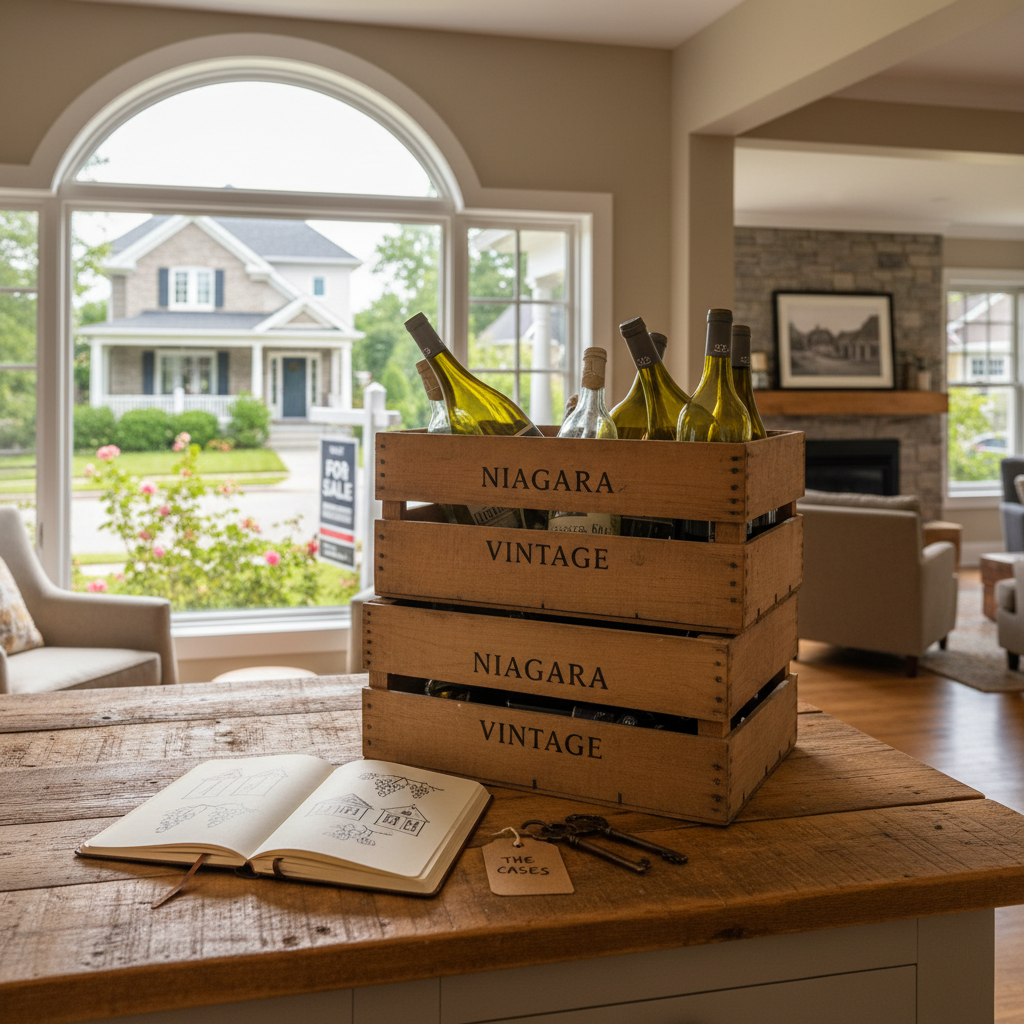
No one can give you a fixed list of Niagara wineries for sale. Only a few are on the market at any time, each owner sets the price on their own, and some prefer to sell quietly. One vineyard for sale Ontario buyers noticed was a Niagara-on-the-Lake winery we wrote about when it came out at $23 million.
The top end moves slowly. In the 52 weeks to October 24, 2026, Niagara homes asking $1.5 million and up had 164 sales from 889 new listings, according to our Niagara market reports. That is a sell-through of 18%, about one sale for every five or six new listings. So the asking price is where talks start. It is rarely where they end.
Why there is no public price list for Niagara wineries
A winery is a farm, a factory, a shop and often a home, all on one piece of land.
Most sales on Realtor.ca are houses. A working winery is usually sold as a farm or a business, so it often won't appear in the same searches as a house in Virgil or Vineland. Some owners don't want staff, grape growers or regular customers to hear about a sale until it's nearly done. That is a fair worry. A tasting room with a staff that's job hunting is worth less than one with a steady team.
The numbers you can check have a gap, too. Our own reports count residential sales only. When I tell you that Niagara-on-the-Lake had an average freehold (house, semi or townhouse) sale price of $1,621,406 in September 2026, up 64% from a year earlier, per our Niagara-on-the-Lake market report, that number is about homes. It is not about wineries.
So why bring it up? It tells you what the house on a winery might be worth to a buyer who only wants the house. That is a useful floor when you are judging a whole property.
The same report shows 103 days on market on average and 406 homes for sale that month. Even plain homes in that town are taking more than three months to sell. A winery with a licence, staff and wine in barrels takes longer to sell than that, and it needs more time for checks before the deal closes.
What a winery asking price actually includes
Two listings can both say $4 million and be two very different buys.
Picture two Niagara wineries side by side, both at the same round price. The first has a big new house, a pretty tasting room and five acres of young vines. The second has an older house, a plain barn for making wine, and twenty acres of vines that have been picking well for years. On a phone screen, the first one wins. Ask what each one earns, and the second one may be the better buy, because a vineyard that already gives fruit you can count on is worth more than a nice kitchen.
When you look at any winery price, split it into three parts in your head:
- The land and the vines. How many acres are planted. Which grapes. How old the vines are. Young vines take a few years before they give a full crop.
- The buildings and the house. The home, the tasting room, the barn or cellar where wine gets made, and any space for events.
- The business. The brand name, the wine club list, the wine already in tanks and bottles, the machines, and the licences.
Ask in writing whether the wine in tanks, barrels and bottles is part of the price or sold on top. Ask the same about the tractors and the bottling gear. The listing will not always say.
The licence is the big one. A licence to make and sell wine in Ontario is granted to a person or a company by the AGCO (Ontario's alcohol regulator). It does not simply pass to you on closing day. Your lawyer and the AGCO should tell you what you need to apply for, and how long it takes, before you sign.
Where Niagara wineries sit, and why it changes the asking price
Niagara isn't one wine market. It's a handful of small ones.
Niagara-on-the-Lake is the busy one. Lots of tour buses, lots of visitors from Toronto, lots of people walking into tasting rooms. A winery here earns more of its money from people who drop by. You pay for that foot traffic in the price.
The Beamsville Bench, Lincoln, Vineland and Jordan sit along the Niagara Escarpment, the long ridge that runs across the region. The Beamsville Bench is its own VQA sub-appellation (a named wine area with its own rules). Wineries up here often sell more on their name and on the quality of the grapes, with quieter roads and fewer walk-ins. Buyers who care most about growing great grapes tend to look here first.
St. Catharines, Pelham, Fonthill and Grimsby have farms and estates mixed in with towns, and the feel changes road by road. It is worth driving these areas on a weekend before you trust any map.
Much of Niagara's grape land is also inside Ontario's Greenbelt, which protects it as farmland. That is good for the wine region, and it shapes what you can build. If your plan is to split off lots, put up a big new event hall or turn vines into houses, find out early, from the town and the region, what is allowed on that exact piece of land.
Some of these properties are sold mostly as homes with a bit of vineyard, and some are full working businesses. Our page on wine estate for sale listings and how we market Niagara estates walks through both kinds.
How I check whether a winery's asking price makes sense
The first thing I ask a winery seller for, in writing, is three years of case sales split by where they went: the tasting room, the wine club, stores and restaurants, and the LCBO. Before I look at the house. Before I walk the vines.
Why that first? Because a winery that sells most of its wine through its own door and its own club keeps more of each dollar than one that sells mostly through stores, and that one fact changes what the whole place is worth more than almost anything you can see on a tour.
After that, I want to see:
- A map of the vineyard blocks. Grape type, year planted, and how much each block picked in the last few harvests.
- Any grape contracts. Some wineries buy grapes from neighbours. Some sell their own extra grapes. Both matter to next year.
- What the staff do. Who makes the wine, who runs the vines, who runs the tasting room, and whether they plan to stay.
- The VQA status of the wines. VQA Ontario wines must be made from grapes grown in Ontario, so where your fruit comes from is tied to what you can put on the label.
I don't have a public price-per-acre figure for working Niagara wineries that I'd stand behind. Sales are too few and too different from each other. What I watch instead is the gap between the ask and what the business, the land and the house could each fetch on their own. When that gap is huge, the seller is usually pricing the dream and leaving out the work.
Mistakes buyers make when chasing a Niagara winery listing
Falling for the tasting room. It's the prettiest room on the property, and it's the part that changes hands most easily. The vines are what took years to grow.
Thinking the price is fixed. With 164 sales out of 889 new listings at $1.5 million and up over the last year, plenty of high-end Niagara sellers did not get a deal done. That gives a serious, ready buyer room to talk. It does not mean every seller will drop. Owners who don't need to sell often just wait.
Leaving the bank too late. Banks look at a winery as a business plus land plus a house. Many will want the same case sales and money records I ask for, so get those early and talk to a bank that lends on farms.
Visiting only in summer. Go in late fall or winter too. You'll see how quiet the tasting room gets, how the roads are, and what the vines look like with nothing hiding them.
Skipping the season clock. If a deal closes just before harvest, someone has to pick, crush and pay staff in those first weeks. Agree in writing who does what, and who keeps that wine.
None of this should scare you off. Owning a Niagara winery is real work, and people do it well every year. The ones who end up happy are the ones who bought the vines and the numbers, then fell for the view as a bonus.
The takeaway: a Niagara winery's asking price is a starting point. Split it into land, buildings and business, ask for three years of case sales before anything else, and judge the price against those.
Questions people ask
Do I need to be a winemaker to buy a Niagara winery?
No. Many owners hire a winemaker and a vineyard manager and run the business side themselves. What you do need is a plan for who makes the wine from day one. Ask whether the current winemaker will stay on after the sale, even for one harvest.
Can I buy a Niagara vineyard and just sell the grapes?
Yes. Many Niagara growers sell their grapes to wineries instead of making wine. If you go this way, ask the seller for any grape contracts they have and how many years are left on each. The Grape Growers of Ontario is the group that speaks for growers and is a good place to learn how grape pricing works.
How long do new grape vines take before they give a crop?
Newly planted vines usually take about three years to give a first real crop, and longer to reach full output. That's why a vineyard full of old, healthy vines is worth more than bare land with the same view. If a listing has young blocks, ask the year each one was planted.
Want to see which Niagara wineries are available this week?
The list changes often, and some owners would rather share details one buyer at a time. Tell us what you're after, a working winery, a vineyard that sells grapes, or an estate with a few rows of vines, and we'll tell you what's out there now. Book a short call with our Niagara team.