
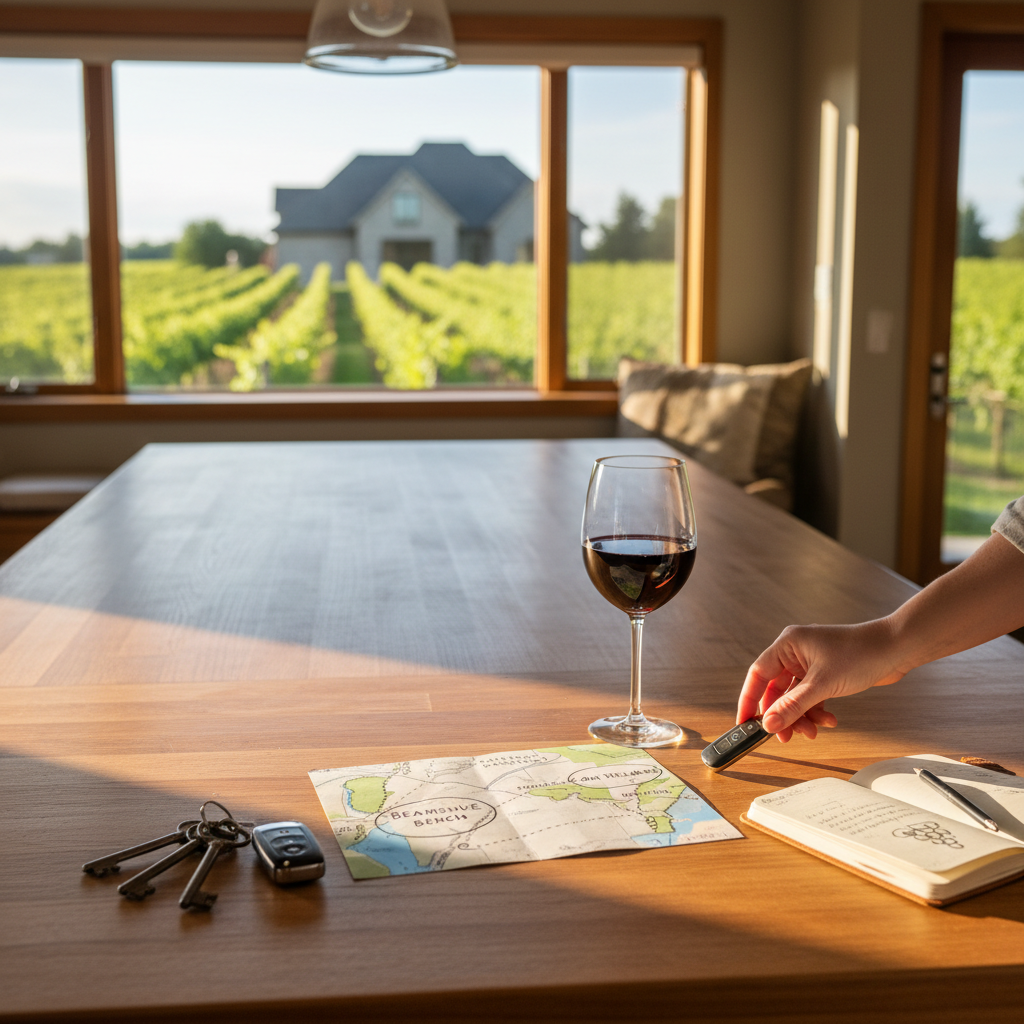
Buy on the Beamsville Bench if you want to grow and make the wine. Buy in Niagara-on-the-Lake if you want people at your door. In Niagara-on-the-Lake, 46 homes sold in October 2026 and 397 were still for sale, according to our Niagara-on-the-Lake October 2026 market report. That gap tells you who holds the power there right now. It's the buyer.
At the top end it's slower still. Across Niagara, homes asking $1.5 million and up had 158 sales from 877 new listings in the 52 weeks to November 7, 2026. That's a sell-through of 18%, meaning fewer than one in five sold, per our Niagara market reports by price band. Wineries live in that band.
I'm Jason Hodder. I've lived in Niagara since 2006 and I sell wineries and vineyards for Found Spaces. Before that I spent twenty years running businesses, and I still look at a winery as a business first and a pretty piece of land second.
The soil is real, but it isn't the whole price
The Bench and the lakeshore really do grow different wine.
The Beamsville Bench is a slope on the side of the Niagara Escarpment. It's cooler, with clay and limestone underfoot, and it's known for Riesling, Chardonnay and Pinot Noir. Niagara-on-the-Lake is mostly flatter land near the lake and the river, with a longer warm season that suits bigger reds and icewine.
Both carry their own names under VQA, Ontario's wine label rules. That matters to a winemaker. It matters much less to the price.
What moves the price is what a buyer confuses for one thing when it's really four: the land, the licence to make and sell wine, the vines already in the ground, and the brand people already know. Two farms on the same road can be worth very different amounts because one has all four and the other has dirt.
Niagara-on-the-Lake sells the visit
Take Big Head Wines at 823 Line 6 in Niagara-on-the-Lake, which I've represented. It makes about 24,000 cases a year, won the 2024 Best Chenin Blanc in the World and Ontario Red Wine of the Year, and asked $12,000,000. You aren't paying for acres at that number. You're paying for a brand and the steady stream of visitors who already drive past.
That's who wants Niagara-on-the-Lake. Toronto buyers. Buyers from overseas. People who picture a tasting room full on a Saturday.
My honest opinion, and some people disagree with me: a lot of buyers pay the Niagara-on-the-Lake premium for traffic they don't plan to use. If you'll sell most of your wine to stores and restaurants, you're paying for a crowd you'll never pour for.
One more thing on that town's numbers. The October average freehold price was $647,518, down 47% from a year earlier. Values didn't halve. Fewer big homes sold that month, so the average fell. Don't read one month's average as the price of land.
The Bench sells the grower's life
The Good Earth Food & Wine Co. sits on the Beamsville Bench. It's a winery, a vineyard and a restaurant, and I've represented it through more than one sale. The buyers who come up that hill tend to be wine people first: growers, chefs, families who want to make something with their hands.
Nearby in Lincoln, 38 acres at 3811 King Street on the Wine Route had 19 acres planted to Cabernet Franc, Chardonnay, Pinot Noir and Pinot Gris, plus approval to build a winery and event centre, at $2,900,000. Those approvals are worth real money. Getting them yourself can take a long time.
The Bench also shows up in different numbers. Beamsville is in Lincoln, which falls in the area the Cornerstone Association of Realtors reports on. Their October figures, reported by the Bay Observer, showed sales up 10.6% from September and homes for sale down 12.6% from a year ago. Niagara-on-the-Lake is reported by the Niagara board, whose latest benchmark I could find was $567,400 for September 2026, down 4.6% in a year. My read: the west end of wine country is tightening a little faster than the east.
What I ask for first
Before I talk price with any winery owner, I ask for three years of case counts in writing, split by where each bottle was sold. Bottles sold at your own door earn far more than bottles sold to a store. That one sheet tells me more than a drone video ever will.
I don't have a clean price per acre to give you, and I'd be wary of anyone who does. Planted acres, the age of the vines, and the licence change it too much. What I watch instead is how much of the money comes from the door and how many people it takes to run the place in harvest.
Pick the sub-region that matches how you'll earn money. The soil decides the wine. The visitors decide the price.
This month, do one thing: write down what share of your wine you expect to sell at your own door. Under half points you toward the Bench. Over half points you toward Niagara-on-the-Lake. You can see how I work these properties on our Niagara winery and estate property page.
Questions people ask
Can I build a winery on any farm in Niagara wine country?
No. Much of Niagara's grape land is protected as a specialty crop area under Ontario's Greenbelt Plan. A winery building, a tasting room or an event space needs approval from the town and often the region. Land that already has those approvals usually costs more for a good reason.
Is the Beamsville Bench cheaper than Niagara-on-the-Lake?
Often, for land that's ready to plant or already planted. The big gap shows up when a Niagara-on-the-Lake property comes with a known brand and a busy tasting room. Compare the four values one by one before you compare the final prices.
Should I only look at wineries in Niagara?
Not always. Burning Kiln Winery in St. Williams sits on 92 acres in Norfolk County and dries grapes in old tobacco kilns, and Coffin Ridge on 80 acres above Georgian Bay draws about 35,000 visitors a year. Both asked well under Niagara-on-the-Lake prices. My work now takes me across Ontario for that reason.
Talk it through with me
If you're weighing the Bench against Niagara-on-the-Lake, send me a note with the share of wine you plan to sell at your door. That one number starts the right conversation. Reach me through our contact page, or read more about me and the wineries I've sold.