By Jason Hodder, Found Spaces Realty Group. Realtor since 2019, living in Niagara since 2006, and before that twenty years as a C-suite operator running mergers and acquisitions.
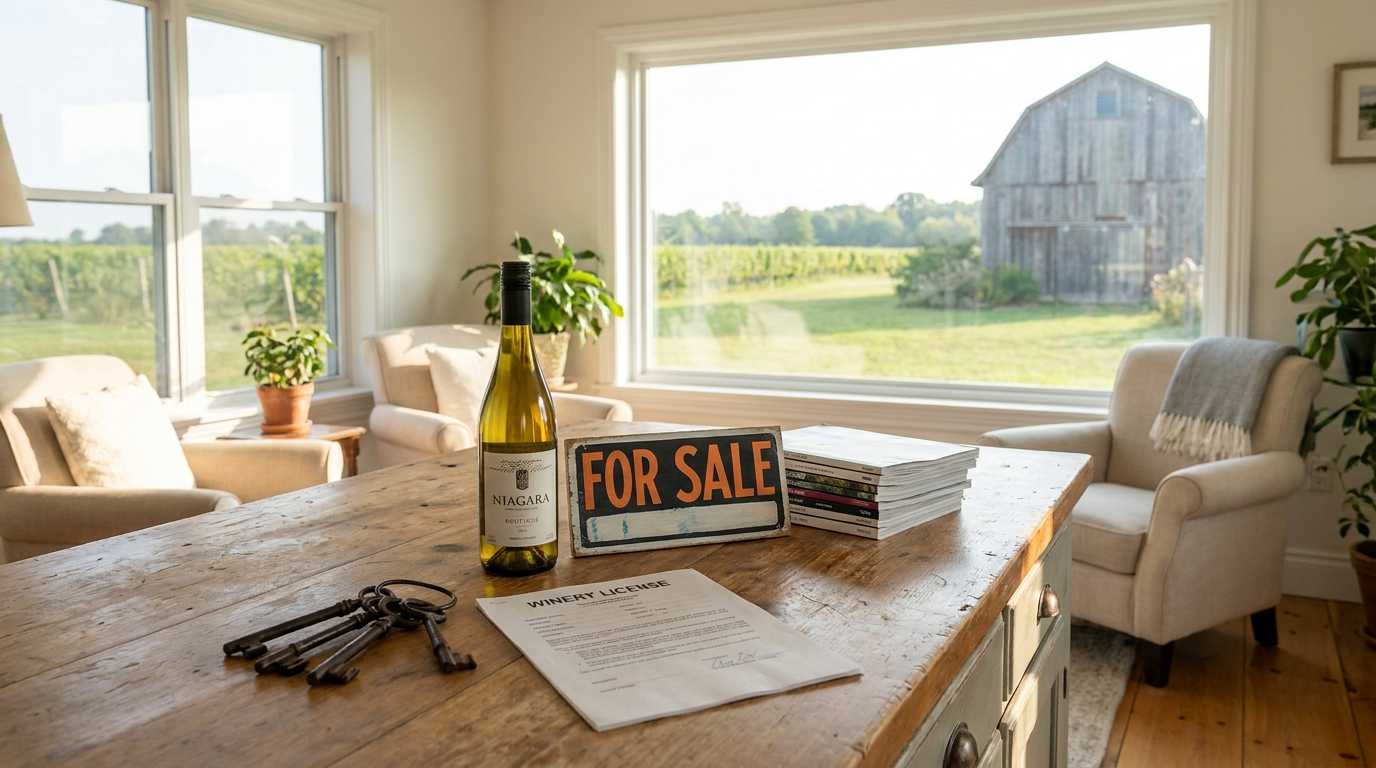
A Niagara winery is worth the sum of four separate things: the land, the licence, the vines and the brand. Each one is priced a different way. Most buyers and many owners blend them into one number, and that is why so many estate listings sit. In Found Spaces' Niagara market report, homes asking $1.5 million and up had 162 sales from 902 new listings in the 52 weeks to September 26, 2026. That is a sell-through of 18%.
Fewer than one in five. At the top of this market, a price that can't be explained part by part doesn't move.
Why I read a winery as a business first
I spent seventeen years at Envirosystems Incorporated. I built its acquisitions work from nothing. I learned one rule there that I still use every week: you never buy a company as one lump. You split it into what it owns and what it earns, and you price each piece on its own.
A winery is a company sitting on farmland. So when I walk a property, I ask about cases, direct-to-consumer sales, staff and the seasons before I ask about the view.
The owners I sit down with often have one number in their head. Usually it's what they put in, plus a feeling. Buyers bring a number too. The two rarely match, because each side is counting different things.
The land and the licence
The land is the part you can compare. Acreage on the Beamsville Bench or along the Lincoln Wine Route trades against other farm acreage nearby. Much of this ground sits inside Ontario's Greenbelt as specialty crop land. That limits what you can build, which protects the land's future as a vineyard.
The licence is the one people forget. A winery licence is tied to the operator, not the soil. A buyer should plan for the approval work and the time it takes. Approvals you already hold are real value. Take 3811 King Street in Lincoln, a listing I represented: 38 acres, 19 of them planted, with approvals in place for a winery and event centre, asking $2,900,000. A buyer there is paying for land, vines and a head start on permission. There's no brand in that price yet, and there shouldn't be.
The vines are a crop with an age
Plantings are priced like equipment with a working life. Young vines won't give you a real crop for years. Old vines may be near the end. The grape matters too. That King Street block grows Cabernet Franc, Chardonnay, Pinot Noir and Pinot Gris, which are grapes Niagara is known for.
I don't have a published per-acre figure for planted versus bare land that I'd stand behind. What I watch instead is simple: vine age, what's been replanted, and three years of tonnage. If a seller can't show tonnage, a buyer should assume the worst.
The brand is earnings, and it's the part people overpay for
This is where I'll get an argument. Awards and a pretty tasting room are not brand value on their own. Brand value is repeat sales you can prove.
Big Head Wines at 823 Line 6 in Niagara-on-the-Lake is a good example of a brand that shows its work. It makes about 24,000 cases a year and won 2024 Best Chenin Blanc in the World. That's why its asking price is $12,000,000. Coffin Ridge, above Georgian Bay, draws about 35,000 visitors a year. Burning Kiln in Norfolk County dries grapes in the original tobacco kilns of its pack barn. Visitors can't get that story anywhere else.
Each of those can be counted: cases, visitors, a story that sells. If a brand can't be counted, it's worth close to nothing to the next owner.
What the Hamilton slump means out here
WOWA, a data site, reported this month that the Hamilton region's average price fell 5.1% to $736,731 in August. That puts it below its August 2021 level. Condo apartments dropped 19.5%. WOWA put Niagara North at $788,628, down 5.6%.
My read is that city buyers now feel the pandemic gains are gone. Some of them will look at wine country and expect a discount on everything. They may get one on the house. They won't get one on proven cases.
Meanwhile, Niagara-on-the-Lake is busier. The Niagara-on-the-Lake market report shows 69 home sales in August 2026, up 47% from a year earlier. The average freehold price was $898,750, up 6%. The town is holding. That supports the land value under every winery in it.
One thing to do this month
If you own a winery, write four numbers on one page before you talk to anyone: land, licence and approvals, vines, brand. Put three years of cases and direct sales under the brand line. If you're buying, ask the seller for the same split. When they can't give it, you've learned something.
I've represented The Good Earth Food & Wine Co. on the Beamsville Bench through more than one sale. Each time, the conversation got easier once the four pieces were on the table.
There's more on what we're seeing across wine country on our Niagara winery and estate properties page.
Questions people ask
Does a winery licence transfer when you buy a Niagara winery?
Plan as if it won't transfer on its own. Licences are held by the operator, so the new owner usually needs their own approvals. Build that time into your closing date. Talk to a lawyer who does winery deals before you firm up.
How long do new grapevines take to produce in Niagara?
New vines usually need about three years before they give a first real crop. Full yields take longer. So a freshly planted block costs money for a while before it earns any. Price young plantings for that wait.
Is a vineyard without a winery easier to sell?
It has a wider pool of buyers, because growers, wineries and estate buyers all look at it. It also needs less proof, since there are no brand earnings to check. The trade-off is that you only get paid for land, vines and any approvals. A winery can earn more, but only when the brand has numbers behind it.
Let's put your four numbers on the table
Whether you own a winery, a vineyard or estate acreage, or you're thinking of buying one, I'm happy to walk through the split with you. No pitch, just the math. Book a conversation with me here. If you own the house on the property too and want a quick starting point for that part, try our instant home evaluation.