
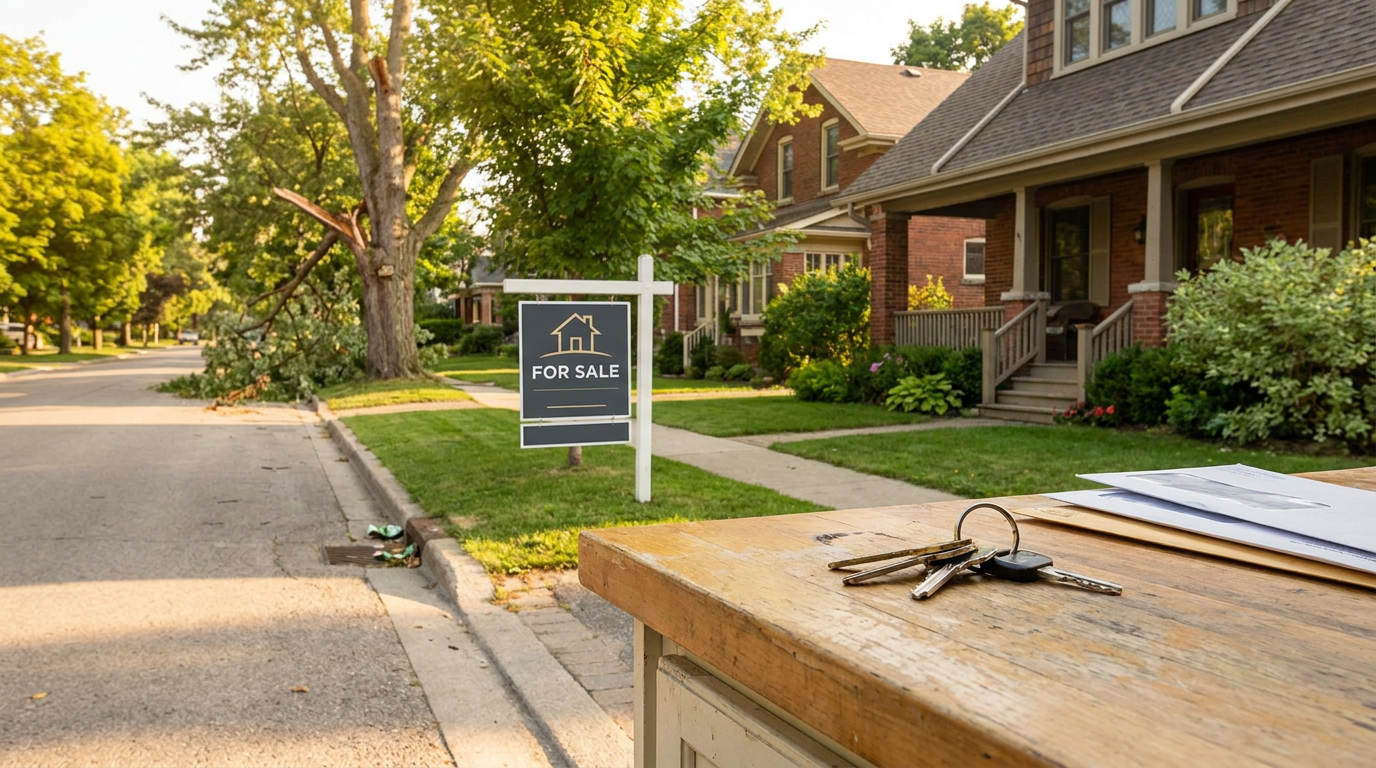
A vineyard owner on the Beamsville Bench doesn't just check the forecast in July. They check the drainage ditch at the bottom of the row. This past summer, that ditch got tested twice.
CBC News reported on September 12, 2026 that a new Insurance Bureau of Canada report puts insured damage from back-to-back July and August storms in Niagara at more than $360 million. St. Catharines Mayor Mat Siscoe told CBC his own home flooded twice. That is not a small-town anecdote. That is the mayor of the region's largest city, standing in his own basement, twice, in one summer.
This matters for anyone who owns or wants to own estate and vineyard property here, and it is already showing up in the numbers.
What council actually did about it
In late August, St. Catharines council moved $20 million out of reserves into a new Emergency Flood Alleviation Program. Homeowners can get reimbursed 90 percent, up to $5,000, for flood protection devices like backwater valves and sump pumps. The mayor also directed staff to report back on seven key recovery areas.
That program is city-specific to St. Catharines right now. If you own or are looking at acreage in Lincoln, Pelham, Niagara-on-the-Lake or further out, it does not apply to you directly. But it tells you something useful: municipal governments in this region are treating flood exposure as a real, ongoing cost line, not a one-off event. If you are shopping estate property near a creek, a low point on the Bench, or anywhere with a history of standing water after heavy rain, expect this kind of program to spread. Ask what your township is doing before you need it.
Why the August numbers look strange
Here is where it gets interesting for sellers. Niagarahomes.com's August 2026 market update, posted September 8, shows 498 homes sold across the region, down 8.6 percent year over year and down 17.0 percent month over month. New listings came in at just 1,152, down 18.6 percent year over year. That combination pushed the sales-to-listings ratio up to 43.2 percent, which on paper looks like a tightening market.
Johnny MacDonald, Chair of the Niagara Association of REALTORS, was direct about why. He said the storms "clearly impacted overall activity, as many sellers had to delay their plans and push back listing their homes," and cautioned that the tighter ratio reflects fewer listings, not stronger demand.
That distinction matters a lot if you are trying to time a sale. A 43.2 percent ratio can look like leverage. It isn't, yet. It's a supply gap caused by people mopping out basements instead of staging homes.
What this means if you're selling an estate or vineyard property
Estate and vineyard sellers had extra reasons to sit on the sidelines this summer, beyond the general flood cleanup. If a storm hit during or right before harvest, an owner isn't thinking about photographers and open houses. They're thinking about crush pad access, equipment that got soaked, drainage in the rows, and whether an insurance adjuster needs to walk the property before a buyer's inspector does.
The MLS HPI benchmark price for the broader Niagara market held at $569,800 in August, down 6.2 percent year over year but only down 0.4 percent month over month. Average days on market rose to 45 from July's 42. Those are general residential numbers, not a vineyard-specific index, but the pattern still tells you something: prices aren't collapsing, they're just moving slower while sellers sort out real property issues first.
If that's you, the smart move is not to rush a listing before repairs and insurance paperwork are sorted. A buyer looking at a $2 million-plus estate on the Bench will ask about flood history, and if you can't answer clearly, that uncertainty becomes their leverage at the negotiating table, not yours. Get the insurance documentation and remediation record in order first. If you're weighing whether now is even the right window, an instant home evaluation gives you a real starting number before you decide.
What this means if you're buying
Both sources flag September as the month to watch, since delayed storm-related listings are expected to come back to market. That's your opening. If you've been circling a property in Niagara-on-the-Lake or the Bench and the seller pulled it in July or August, September is when it likely resurfaces, and you'll have more competition sitting it out than you'd expect, because a lot of buyers read "tighter ratio" and assume the market got hot. It didn't. It just got thinner.
For Toronto and international buyers who are less familiar with this region's terrain, this is also the year to ask harder questions about drainage, well water, and creek proximity before you fall for the view. A vineyard or estate parcel near the escarpment can have beautiful elevation and still have a low corner that pools every heavy rain. Ask the seller directly about the July and August storms specifically. If they hesitate, that's information.
Pricing softness, at 6.2 percent below last year on the benchmark, plus a genuine supply gap from delayed listings, is not a bad combination for a patient buyer with cash ready and a good inspector lined up.
The one thing to do this month
If you're selling: get your flood documentation and any repairs finished before you list, and don't assume the tighter ratio means you can skip staging your case for a buyer. If you're buying: watch September closely, since this is when the delayed inventory is expected to land, and go in with specific questions about the two storms rather than general ones about "has it ever flooded."
Either way, this region's estate and vineyard segment runs on details a general residential number can't capture. That's worth remembering before you read too much into any single month's stats.
Takeaway: Niagara's August housing numbers look tight because sellers delayed listing after $360 million in storm damage, not because demand jumped. Buyers should expect that inventory back in September, and sellers should have their flood story straight before it hits the market.
Talk to someone who watches this market closely
If you're weighing a vineyard, estate, or acreage purchase in Niagara-on-the-Lake, the Beamsville Bench, or anywhere in between, this is a season where local detail matters more than the headline numbers. Take a look at our Niagara winery and estate property page for what's currently available, or get in touch to talk through what September's listing wave might mean for your specific search or sale.


