
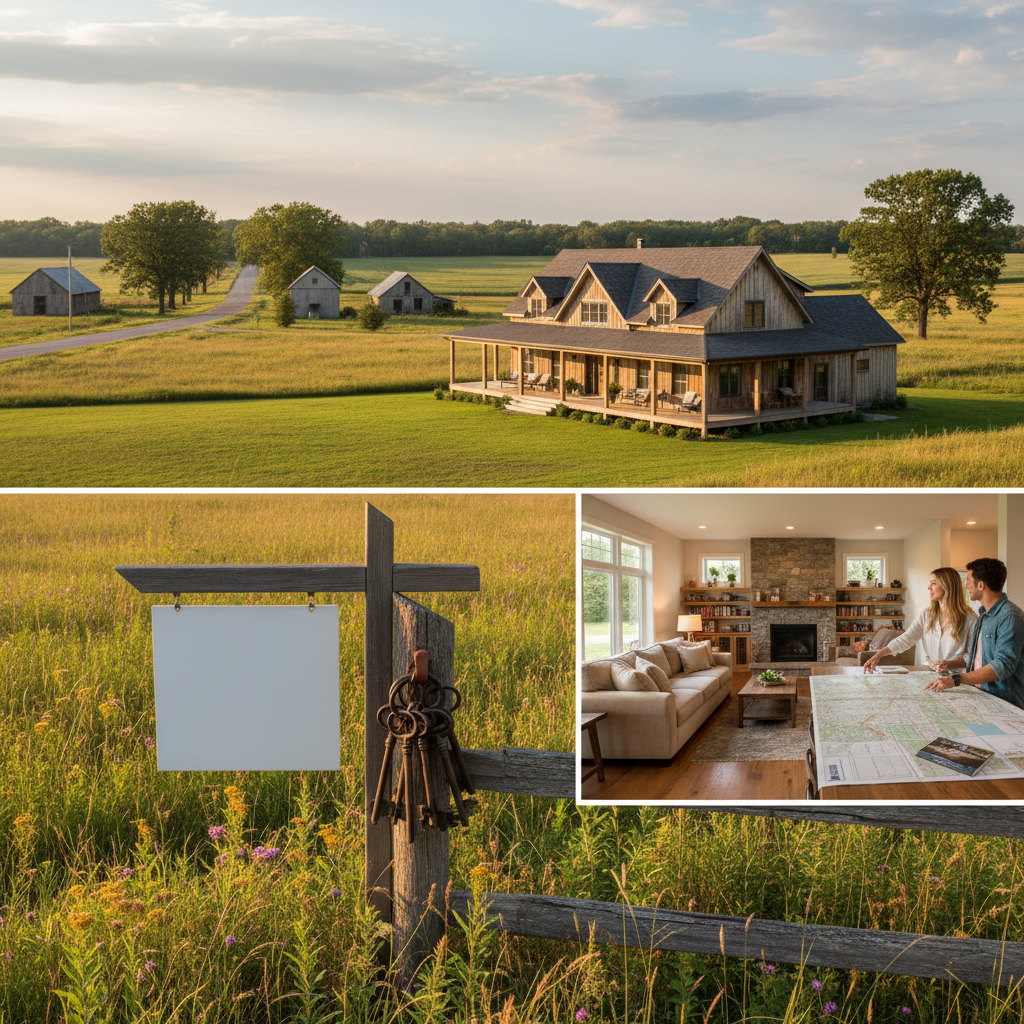
On most rural Niagara acreage, you can farm the land and live in the house that's already there. Almost anything more needs a yes from the town first. Buyers have time to check before they sign: Niagara-on-the-Lake had 397 homes for sale and only 46 sales in October 2026, according to our Niagara-on-the-Lake market report.
A second house, a lot split, a winery, an event barn. Each one takes permission, sometimes from three levels of government at once. Buyers who skip the checks often find out after closing.
I'm Jason Hodder. I've lived in Niagara since 2006 and have been a Realtor since 2019. I sell wineries, vineyards and estate land, from the Beamsville Bench to Niagara-on-the-Lake. Here is the opinion I'll stand behind. On rural land, you are paying for what the rules let you do with it. The acres come second. Two farms of the same size on the same road can be worth very different amounts, and the reason is almost always on paper at the town office.
Cornerstone's October numbers, read from out here
The Cornerstone Association of REALTORS put out its October report on November 4, and the Bay Observer reposted it this month. For Hamilton, Burlington, Haldimand and Niagara North, Cornerstone's October 2026 market update shows a benchmark price of $728,900. That is the price of a typical home in the area. It was up 1.4% from September and down 2.4% from a year earlier. The bigger story is supply. Homes for sale fell 12.6% from a year earlier, leaving 4.6 months of supply.
Months of supply means this. If nobody listed another home, it would take 4.6 months to sell everything on the market at the current pace.
Niagara North is part of that report. It covers Grimsby, Lincoln and West Lincoln, which is a lot of the fruit and grape land I work. Out in Niagara-on-the-Lake, though, the picture looks different. In October, 397 homes for sale against 46 sales works out to about eight and a half months of supply at that pace. That's nearly double the Cornerstone figure.
The top of the market is quieter still. Over the 52 weeks to November 14, 2026, Niagara homes asking $1.5 million and up had 160 sales from 874 new listings, a sell-through of 18%, according to our Niagara market reports. That means fewer than one in five listings in that price band sold. A lot of estate acreage sits in that band.
So here is my read. The city side is getting tighter. Rural Niagara and the estate market are not, at least not yet. That gives a buyer something valuable: time and leverage. You can ask for a condition, which is a clause that lets you walk away if a check fails. Many sellers will say yes right now. Use that time on zoning, because it's the check people skip.
One caution on the Niagara-on-the-Lake numbers. The average freehold sale price there was $647,518 in October, down 47% from a year earlier. Don't read that as values falling by half. With only 46 sales in a month, a few large estates selling one October and not the next can swing an average that hard. I watch the asking prices of similar properties on the same kind of land instead.
Four sets of rules can sit on one Niagara farm
Most buyers think there is one rulebook. On a lot of Niagara land there are four, stacked on top of each other.
First is the town's zoning bylaw. That's the local rulebook for what you can build and do on that exact lot. Lincoln, Pelham, West Lincoln and Niagara-on-the-Lake each have their own.
Second is Niagara Region's official plan, the big map of where towns can grow and where farms must stay farms.
Third is the provincial Greenbelt. Much of the fruit and grape land between Grimsby and Niagara-on-the-Lake sits inside the Greenbelt's specialty crop area, a zone the province set aside to protect tender fruit and grape growing, and it carries some of the strictest farmland protection in Ontario. On that land, the answer to "can I split off a lot?" is usually no.
Fourth, for anything on or near the escarpment, is the Niagara Escarpment Commission. On many properties in its area, you need a permit from the Commission before the town will even look at a building permit. Add the Niagara Peninsula Conservation Authority if there's a creek, a wetland or a steep slope on the land. They control what can be built near water and slopes.
None of this is bad news. These rules are a big part of why the bench still looks the way it does, and why vineyard land here holds its value. They just mean the listing sheet is the start of your homework.
The second house nobody can build
Picture a couple from Toronto who buy ten acres in Lincoln with one house on it. Their plan is to build a small second home on the back corner for her parents. They pay a price that makes sense only if that second home can go up. After closing, they go to the town and learn the land is in the specialty crop area, a new lot can't be split off, and the rules for an extra home on farmland come with conditions this property can't meet. The parents stay in the city, and the couple owns a lovely property they paid too much for. The fix would have cost them nothing: one call to the town's planning office before they signed, and a condition in the offer.
Those numbers are an example, not a sale I handled. But every buyer I take through rural land with a big plan needs to hear that story before the first showing.
Five questions I ask before anyone makes an offer
These are the questions I want answered in writing before a buyer of mine commits. They work on a 38-acre vineyard and on a five-acre country home.
1. What is the zoning, from the town and in writing? The listing may say "agricultural." That word covers a dozen different zones with different rules. Ask the town planning office what zone the property sits in and what that zone allows. Many towns will give you a letter for a fee. Get it.
2. Can a home be added or a lot split off? Provincial rules now let towns allow extra homes on some farm lots. Each town decides whether and how, and the Greenbelt and escarpment rules can still say no. Splitting off a new lot is rarer still. If your price only works with a second house, make the offer conditional on the town confirming it.
3. What is already approved, and does it go with the land? Some approvals belong to the property. Others belong to the business or the person who got them. The licence to make and sell wine belongs to the winery business, and it has to be handled apart from the land deal. Ask which is which.
4. What does the water and septic look like? Rural homes run on a well for water and a septic system for waste. Test the well water. Have the septic inspected. A septic built for one family can't serve a tasting room, a rental cottage or a wedding tent, and replacing it is a large bill.
5. Who farms the land now, and what does the tax bill assume? Farmland can be taxed at a much lower farm rate. That rate depends on the land being farmed as a registered farm business, by you or by a farmer who rents it. If the current owner rents the fields to a neighbour, ask for that lease. If the farming stops after you buy, the tax bill can jump.
Approvals have a price, and I read them like a business
Before real estate, I spent twenty years running businesses in industrial, environmental and marine services across North America. Seventeen of those years were at Envirosystems Incorporated, where I built the company's buying-and-merging side from nothing. That work taught me to read anything I value as a business first, and to ask what a buyer would have to spend, in money and in years, to get where this asset already is.
On a farm, approvals are the clearest case. Take 38 acres at 3811 King Street in Lincoln, on the Wine Route, a property I represented. Nineteen of those acres are planted to Cabernet Franc, Chardonnay, Pinot Noir and Pinot Gris. That's exactly half the land planted, which leaves 19 acres of room. The property also came with approvals in place for a winery and an event centre, at an asking price of $2,900,000. A buyer starting from bare land would face years of applications, studies and hearings to reach that point, with no promise of a yes at the end. Approvals already in hand are part of what the price pays for.
The same goes for buildings. At Burning Kiln Winery in St. Williams, the winery runs in a repurposed tobacco pack barn, and the old kilns now dry grapes in the appassimento style. Using a building that's already on the land, for a use that's already allowed, is often far easier than building new. At Coffin Ridge, above Georgian Bay, about 35,000 visitors come each year. A place that busy depends on approvals for a tasting room, parking and the septic to serve all those people. When I walk a property, I'm looking at those things as hard as I'm looking at the view.
This is why I tell buyers there are four values hiding in a winery: the land, the licence, the plantings and the brand. People blur them into one price. On a plain rural home, the list is shorter, but the idea holds. The land, the house, and what you're allowed to add are three separate things.
One habit from my old work stuck. The first thing I ask a seller for, in writing, is a list of every approval and permit the property holds, with the date each one was granted. Dates matter. An old approval may have conditions attached that nobody living there remembers.
You can see the kinds of farm, vineyard and estate properties we work on our Niagara winery and estate properties page.
One thing to do this month
If you have a rural Niagara property in your sights, do one thing before the second showing. Call the town's planning office with the address and ask two things. What zone is it in, and is it inside the Greenbelt or the escarpment area? It's a short call. It will tell you whether your plan for the land is a normal one or a long fight.
The market is giving you the time to make that call. With supply as high as it is in Niagara-on-the-Lake and at the top of the market, a well-checked offer with sensible conditions is a fair ask. Use the slow season to buy carefully. That's how people end up loving a farm property ten years later.
Questions people ask
Can I sever a lot off my farm in Niagara?
Usually not, especially inside the Greenbelt's specialty crop area. The main exception is when a farmer buys a neighbouring farm and the extra house becomes surplus to the farm operation. In that case the house may be split off with a small lot, if the farmland left behind can't have a new home built on it. Your town's planning office can tell you if your land could ever qualify.
Can I run a short-term rental or event space on Niagara farmland?
Provincial rules allow some small side businesses on farms, like a farm shop or a small event space. They must stay small next to the farm itself, and the town must approve them. Niagara-on-the-Lake also requires a licence for short-term rentals. Check both before you count that income in your price.
Does a conditional offer hurt my chances on a Niagara estate property?
In a busy market it can. Right now, with fewer than one in five Niagara homes asking $1.5 million and up selling over the past year, sellers expect careful buyers. Keep the condition period short and specific, such as ten business days to confirm zoning with the town. A clear, short condition reads as serious, not fussy.
Send me the address before you write the offer
If you're looking at rural Niagara land or an estate property, tell me where it is and what you hope to do with it. I'll tell you which rules sit on it and which questions to get answered in writing before you sign. Send me the property address here, and we'll set up a call to talk it through.