
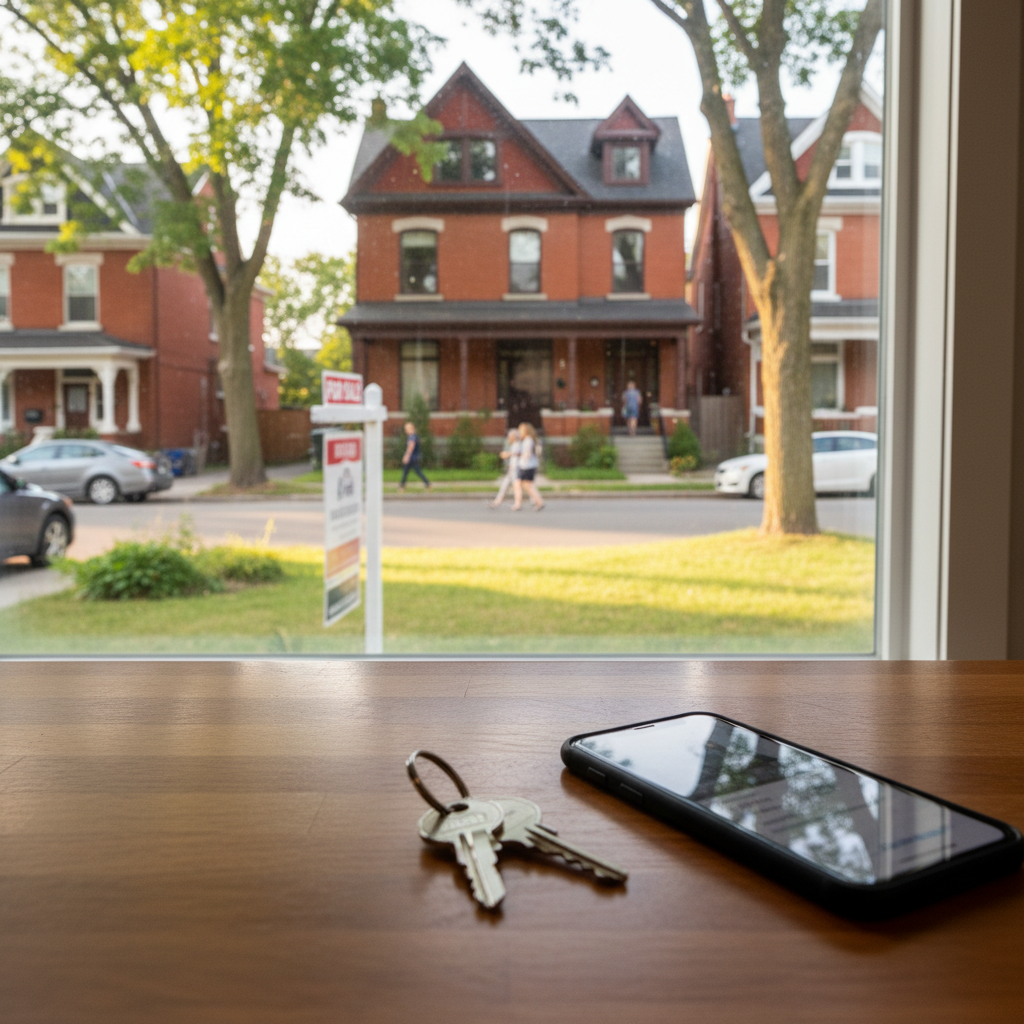
As the executor, you can sell a Hamilton rental with the tenants still in it. The lease does not end when the owner dies. It does not end when the house sells either. In October 2026, a Hamilton home took 40 days to sell on average, according to our Hamilton market report for October 2026. That is your window to plan the tenant side before the sign goes up.
The same report puts the average freehold price (a house you own outright, with no condo fee) at $738,207 in October 2026, down 1% from a year earlier. A tenanted home can sell for less than that, or for more. It depends on who buys it. Work that out first.
The lease keeps going after the owner is gone
The tenants keep their home. Their rent stays the same. Their rights stay the same. You now stand where the landlord stood, and you sign on the estate's behalf.
I've sold more than 300 properties since I was licensed in 2017. I also own rental buildings in Hamilton myself, so I know the landlord's side from the inside. You can read more about how I work on my profile page. Every executor I sit down with asks me the same thing first: "Do the tenants have to leave before we sell?"
No. And often you shouldn't want them to.
Picture three grown kids standing in their late dad's up-and-down duplex on the Mountain, a tenant upstairs who has paid on time for years, and a family member downstairs who has already moved out. One sibling wants the whole house empty, because empty houses "sell better." So they talk about pushing the tenant out, and the tenant gets nervous and stops answering the door. The listing sits. Then a buyer shows up who wants a house with rent already coming in, and that tenant turns out to be the best thing in the building. This is an example, not a real family, but the lesson is real. Find out who your buyer is before you decide what to do with the tenant.
Price it two ways before anyone touches a notice
There are two kinds of buyers for a Hamilton rental. One wants to live in it. The other wants the rent. They pay different prices for the same house.
The buyer who will live there wants it empty, or at least one unit empty. The buyer who wants rent will look hard at what the tenant pays today, because that rent comes with the building until the tenant chooses to leave. A tenant who moved in years ago may pay well below today's asking rents. Hamilton's median asking rent for a self-contained unit (an apartment-style unit in a house) was $1,795 a month over the twelve months to mid-November 2026. Those are asking rents from lease listings on both boards, not signed leases. Still, it shows you the gap a buyer will see.
My working habit is one page with two columns. On the left, what the home would sell for with the tenants in place. On the right, what it would sell for empty. I pull homes like yours that sold nearby from both real estate boards, because Hamilton sales show up on both, and a price built from only one board misses buyers. Then the estate looks at the gap and decides.
Price it both ways before you decide anything about the tenant. The gap between the two numbers tells you what to do next.
What the notices can do, and what they can't
This is where estates get into trouble. The law sets the order of things. You can't skip a step because the family wants to close by spring.
The N12. This is the form that asks a tenant to leave because the buyer, or the buyer's family, will move in. Three things about it. It only works once the lease has ended and the tenant is month to month. The buyer has to plan to live there. And it comes with the compensation the Act requires, one month's rent. The estate can't use it just to empty the house for a better sale.
The N11. This is a written deal where the tenant agrees to leave on a set date. Nobody can force it. Most tenants sign one only for a payment that makes moving worth it to them. If the two-column page shows the empty price is far higher, a fair payment for an N11 can make sense. If the gap is small, keep the tenant and sell to the buyer who wants rent.
Some families try to go around this. They hint, they press, they stop fixing things. It backfires. A tenant who feels pushed stops cooperating with showings, and a building with a tense tenant shows badly.
Showings when the tenant didn't ask for any of this
Every showing needs 24 hours' written notice, and it has to fall between 8am and 8pm. That's the rule for every visit, every time.
The tenant didn't choose this sale. Someone they knew may have died. Start with a plain, kind letter from the executor. Say who you are, who they now pay rent to, and that their lease stays the same. Then ask which hours suit them best for showings. Group the showings into a few set windows each week. A tenant who knows Tuesday and Saturday afternoons are showing times will tidy up and stay calm. A tenant hit with a new notice every day won't.
One more thing for the building itself. If any unit is empty, call the home insurer right away. Many policies change when a home sits empty, and an estate can't afford a gap there.
Getting a duplex or triplex ready without emptying it
A multi-unit building is judged on paperwork as much as paint. The buyers who want rent will ask for the same things every time, so gather them before the listing goes live: each lease, what each tenant pays, who pays which utility, and any last month's rent deposit the estate holds.
Then look at the price range you'll be competing in. Over the last 12 months, the median asking price for an up-and-down duplex in Hamilton was $749,900, from 112 listings. A triplex asked $799,900 at the median, from 67 listings, and a fourplex asked $999,999, from 26. Those are asking prices, not sales. They tell you how many buildings like yours a buyer can choose from, and the up-and-down duplex has the most competition by far.
Fix what a home inspector would flag. Leave the fancy upgrades alone. An empty unit can get fresh paint and a deep clean. A lived-in unit needs only working smoke alarms, working taps and a clear path to the furnace room. The buyers looking through our Hamilton investment properties care about rent, condition and paperwork, in that order.
Why estate listings relist, and how to stop it
An estate listing that comes off the market and goes back on with a new price looks stale. Buyers notice. Most relists I see come from one mistake: the price was set for one kind of buyer, and the house was shown to the other.
An empty-house price on a building with long-term tenants scares off the buyer who wants to live there, because they can't move in. It also scares off the buyer who wants rent, because the numbers don't work at that price. The listing sits past the 40-day average, and the family starts to argue.
Set the price from the two-column page. Write the tenant facts in the listing. Have the showing windows agreed before day one. Do those three, and the first price is usually the one that sticks.
Questions people ask
Can the executor raise the rent before selling the house?
Only under the normal rules. A rent increase needs 90 days' written notice on the right form. At least 12 months must have passed since the last one. A small increase rarely changes what a buyer pays, and it can sour a tenant you need for showings.
Who collects the rent while the estate is being settled?
The executor does, on the estate's behalf. Give each tenant a written notice saying where to pay from now on. Keep the rent in the estate's account, apart from your own money. Keep a record of every payment, because buyers and the estate lawyer will both ask for it.
What happens to the tenant's last month's rent deposit when the house sells?
It moves to the buyer at closing. The lawyers handle it as a credit to the buyer, with any interest still owing to the tenant. Find the deposit amount early. If the paperwork is missing, ask the tenant for their copy of the receipt.
Find out what the house is worth with the tenants in it
Start with one number before you make any choice about the tenants. Use our instant home evaluation to see what the property would sell for. I'll follow up with the tenanted and vacant prices side by side, so the estate can decide with both in front of it.