
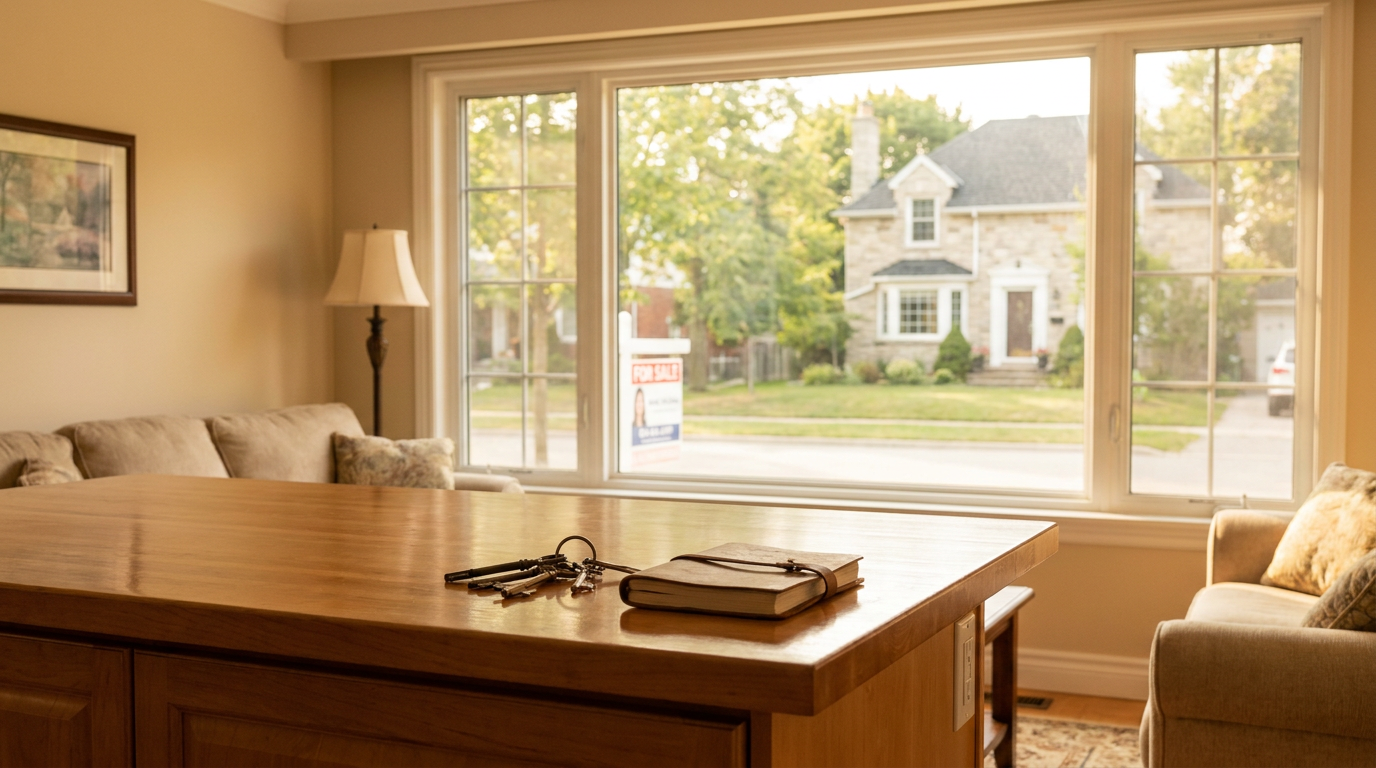
Type "Burlington real estate for sale" into Google and you get a wall of listings. A condo near the GO station. A bungalow in Aldershot. A $3.2 million waterfront home in Roseland. They all sit on the same page, sorted by whatever algorithm decided to show them to you that day.
That's fine if you want a starter townhome. It's not fine if you're buying or selling in Burlington's luxury and waterfront tier. That market doesn't behave like the rest of the city, and a generic search will never tell you why.
The Search Bar Lumps Everything Together
Realtor.ca and most portal searches sort by price, date, or distance. They don't sort by lot depth, shoreline access, school catchment quality, or how a street has traded over the last five years. A $1.8 million home in Tyandaga and a $1.8 million home in the Orchard can look identical on a search results page and be worlds apart in what they actually offer.
This matters most above the $1.5 million mark, where buyers stop shopping by price point alone. They're comparing lifestyle: Is it walkable to the lake? Is the lot private? Is the street quiet or does it carry through-traffic to Lakeshore Road? None of that shows up in a filter dropdown. It shows up when someone who knows the streets walks you through it, which is a big part of what a dedicated luxury pillar page is built to do instead of a generic search.
What Burlington's Neighbourhoods Actually Command
Each pocket of Burlington has its own personality and its own price behaviour.
Roseland and Shoreacres sit closest to the lake and command the city's highest per-square-foot prices. Mature trees, larger lots, and proximity to downtown Burlington and the waterfront trail make these areas a draw for move-up buyers and downsizers who still want space. Homes here rarely sit long when priced correctly, because inventory is thin and demand from both local upgraders and out-of-town buyers stays steady.
Aldershot offers a different value proposition: bigger lots, a mix of older character homes and newer builds, and easier access to the QEW and Hamilton. It's popular with buyers who want more land for less money than Roseland, and it's seen real reinvestment over the past decade as older homes get renovated or rebuilt.
Tyandaga sits up on the escarpment with golf course proximity and a quieter, more suburban feel. It tends to attract families and buyers looking for newer construction with a bit more separation from downtown noise.
Millcroft and the Orchard are Burlington's newer, planned communities. They trade on consistency: similar build quality, similar lot sizes, and predictable school and park access. These areas move well because buyers know what they're getting before they even book a showing.
Knowing which pocket you're in changes everything about how a home should be priced and marketed. A one-size-fits-all search result can't tell you that. A local read of recent sales on your specific street can.
If You're Selling Above $1.5 Million, the Rules Change
A home in this range doesn't sell to the same buyer pool as a $700,000 townhome. Buyers here are often already homeowners, they're patient, and they're comparing your listing against three or four others in the same tier, sometimes in different cities entirely.
That means the photos need to do more work. It means the listing description needs to answer the questions a serious buyer actually asks: lot size, recent updates, proximity to the water, school boundaries, and whether the home has been renovated with permits. A generic MLS write-up written for volume doesn't cut it here.
Pricing also carries more risk at this level. A misstep of two or three percent on a $600,000 home is a rounding error. The same percentage on a $2.2 million home is $60,000 or more, and it can sit on the market long enough to make buyers wonder what's wrong with it. Getting the number right the first time matters more, not less, as the price climbs.
Waterfront Comes With Its Own Checklist
Waterfront and near-waterfront properties in Burlington, especially around Indian Point and the Roseland shoreline, carry details that never show up in a keyword search. Shoreline condition, erosion protection, septic versus municipal servicing on older lots, and conservation authority setbacks can all affect what a buyer can actually do with the property.
We walked through one of these in detail in our look at a 250-foot waterfront estate in Burlington's Indian Point, where frontage and lot configuration were as much a part of the value story as square footage. That kind of nuance is exactly what gets lost when a property is filed under the same broad search term as everything else for sale in the city.
If you own a waterfront or near-waterfront home and you're thinking about listing, get a proper read on how those specifics affect value before you set a price. It's not the same math as a standard subdivision home.
Timing Looks Different at the Top of the Market
The standard advice is to list in spring. That's true for most of Burlington, but the luxury and waterfront tier often moves on a slightly different clock. Serious buyers in this range aren't rushing because of school-year deadlines the way young families are. They're watching for the right property to come up, whenever that happens.
That gives sellers in this tier a bit more flexibility, but it also means competing listings matter more than the calendar. If two comparable homes in Shoreacres or Millcroft list in the same month, buyers will compare them directly. Knowing what else is active, or about to come active, in your specific pocket is worth more than knowing the general seasonal pattern.
The takeaway: a generic search for Burlington real estate for sale will show you everything and tell you almost nothing about the luxury and waterfront tier. Street-level knowledge of neighbourhoods like Roseland, Shoreacres, Aldershot, Tyandaga, Millcroft, and the Orchard is what actually separates a well-priced listing from one that lingers.
Thinking About Buying or Selling in This Tier
If you're weighing a move in Burlington's luxury or waterfront market, start with real numbers on your own property. Book your instant home evaluation to see where your home actually sits against recent sales in your pocket of the city, not against a citywide average that doesn't apply to you. You can also browse current listings to see what's competing right now, or reach out for a conversation about your specific street and situation.