
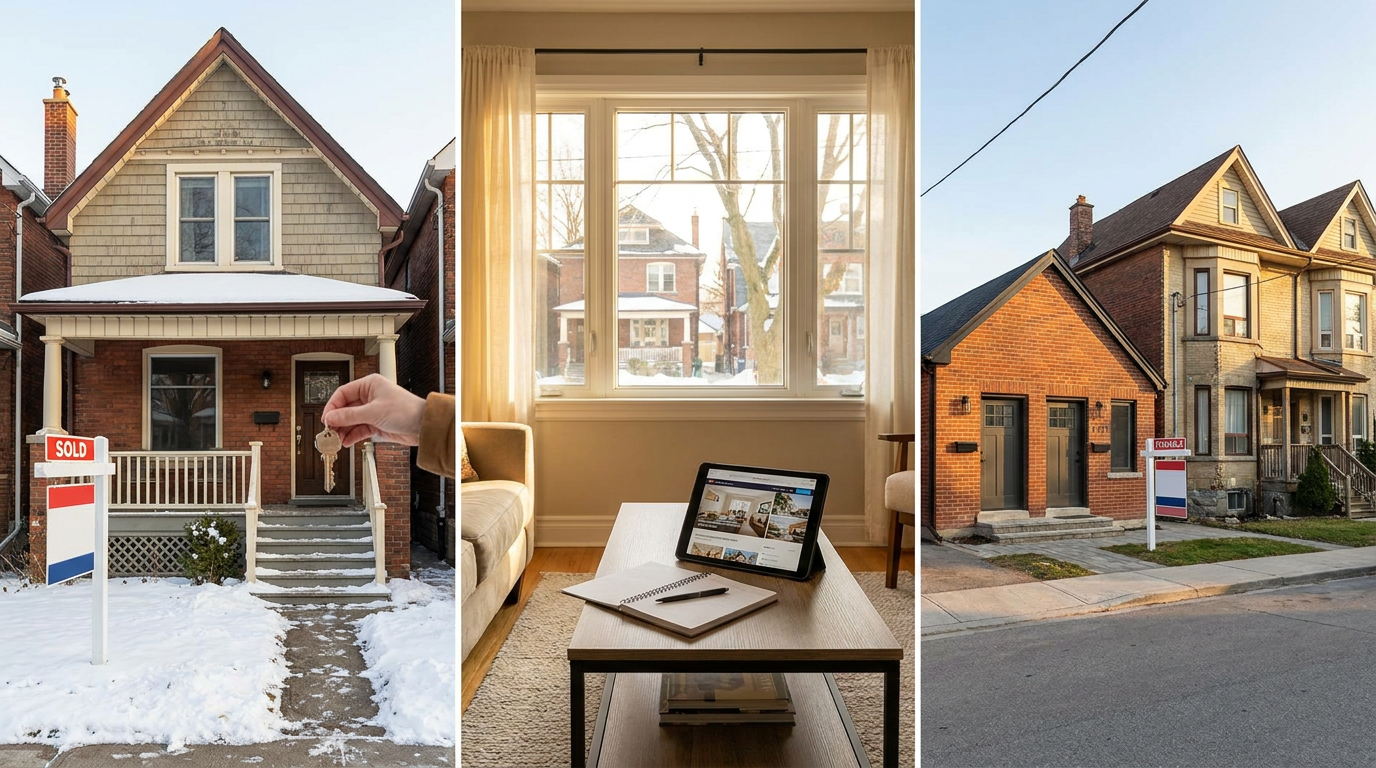
I tell new investors to build in three steps: a home you live in, then a duplex you live in, then a triplex or fourplex. The order follows the money. Under CMHC's insured mortgage rules, an owner-occupied duplex needs the same down payment as a regular house, which is 5% on the first $500,000. Up to 100% of the gross rent can count toward qualifying. Jump to a three or four unit building and you need at least 10% down, with only up to 50% of the rent counted.
That gap is the whole reason for the order. Each stage makes the next one easier to finance and easier to run.
I'm Sandy MacKay. I bought my first investment property in Oshawa in 2012, and I've been buying, renovating and running income property ever since. I've coached more than 300 realtors and investors. Most of them wanted to skip straight to the fourplex. Here's why I slow them down, and why I think slowing down gets them there faster. You can read more about my background as an investor and coach.
Stage one: buy your home like it's your first deal
Most people buy their first home on feelings. Nice kitchen. Close to work. That's fine, but I want one more question on the list: what does this house let me do in five years?
In Hamilton, that question has real answers. Ontario's More Homes Built Faster Act lets most residential lots carry up to three units. So a detached house with a side door, a basement with decent ceiling height and room to park can become a legal second unit later, while a similar house without those things might never get there. Two houses can look almost the same on Realtor.ca and have very different futures.
The home also does a quieter job. It builds equity. It builds a payment history lenders trust. And it teaches you what owning really costs: the furnace that dies in February, the property tax bill, the roof.
You learn those lessons on your own home, where the only tenant who complains is you.
My rule: your first home is your house and your training ground. Buy one that leaves a door open to more units later.
Stage two: the duplex is where a portfolio starts
I'll say the opinion plainly. The duplex is the most important step, and it's the one people stall on.
The reason is the financing. An owner-occupied two unit home gets treated close to a regular house. You can put 5% down on the first $500,000 and 10% on the part above that. The lender can count up to 100% of the gross rent from the second unit when working out what you can afford. No other property type in Canada gives a regular wage earner that much help.
Picture a couple who own a small semi in east Hamilton. They've built up some equity, and their mortgage is steady. They sell, or borrow against what they have, and buy a legal duplex. Upstairs rent covers a big piece of the mortgage. For the first time, they're landlords who can hear the tenant's dishwasher through the floor, which sounds like a downside until you realise it means every small problem gets caught early and fixed cheap. Two years later they know how to screen a tenant, write a lease and price a unit. Those skills are worth more than the rent. (Round numbers and people are illustrative, not anyone I've worked with.)
That last point is the one I push hardest. A duplex is a small, safe place to make your landlord mistakes. Underpricing a unit by a hundred dollars hurts. Underpricing four units hurts four times as much.
One thing I ask for before anyone moves to this stage: the lender's pre-approval in writing, showing exactly how much of the rent they're counting. People hear "100%" and assume it applies to them. The lender decides, and I want it on paper before we write an offer.
Stage three: the triplex or fourplex, and why it waits
Here the rules tighten. For an owner-occupied three or four unit building, CMHC's minimum down payment is 10%. The lender can count up to 50% of the gross rent, or use the net rent instead. That's half the help you got on the duplex.
So why bother? Because the building pays you more per dollar of work. Four units share one roof, one lot and one tax bill. Your cost per door drops. You can see this in our Hamilton duplex, triplex and fourplex report, which breaks out median asking price per unit by building size and by neighbourhood. Look at how the per-unit price changes as buildings get bigger. That's the case for stage three in one table.
But look at what it asks of you. A bigger down payment, which your first two stages helped you save or build as equity. A stronger income on paper, since less of the rent counts. And real landlord skill, because four tenants means four leases, four sets of move-outs and more calls.
Someone who skips the duplex shows up at stage three with less equity, a thinner track record and no idea how to run a unit. Someone who did the duplex shows up with all three.
The part people get wrong between stages
The mistake I see most is moving too fast or too slow, with nothing in between to guide the timing.
I don't have a magic number of years between stages. What I watch instead is three things. Is there enough equity to fund the next down payment without draining your emergency cash? Is your income steady enough that a lender will like it? And do you actually enjoy being a landlord, or do you dread every text?
If the answer to that last one is no, stop at the duplex. That's still a great result. A paid-down duplex is a real asset, and there's no shame in owning two doors you sleep well with.
The second mistake is running the numbers on hope. Before any stage two or three purchase, I want the deal checked on net operating income, cap rate, debt coverage and cash-on-cash. We lay out how we do that, including our expense assumptions as a share of rent, on our page about how we underwrite an income property. If the deal only works with perfect rent and zero repairs, it doesn't work.
The third mistake is assuming a unit is legal because it has a kitchen. In Hamilton, I want proof the second or third unit is registered with the city before anyone counts its rent. An illegal unit can't be financed the same way, and it can be shut down.
What leverage actually means in this plan
I think of real estate as a wealth-building tool first and a transaction second. The work, at every stage, is leverage. That means four things: the right financing, the right zoning, the right tenants and the right team.
Financing is the CMHC rules above, used in the right order. Zoning is buying lots that allow more units later. Tenants are the people who make or break your cash flow, so screening matters more than paint colour. And the team is your lender, your lawyer, a contractor who answers the phone, and someone to manage the property when you'd rather not.
That's why I built Found Spaces Property Management alongside the sales side. By stage three, plenty of owners want help running the building. Planning for that early, and pricing it into your numbers, keeps a good deal good.
If you want to see what each stage looks like on the ground right now, our page on Hamilton investment properties is a good place to start.
Questions people ask
Can I use equity from my first home as the down payment on a duplex?
Often, yes. Many lenders accept money borrowed against a property you already own, like a home equity line, as a down payment source. The catch is that the new payment on that borrowed money counts in your debt ratios. So it can shrink how much you qualify for on the duplex.
Do I have to live in the fourplex to get 10% down?
Yes. The 10% minimum applies to owner-occupied three and four unit buildings. If you buy one purely as a rental, expect most lenders to want at least 20% down. That's another reason the live-in stages come first.
What happens after a fourplex?
At five units and up, you move into commercial lending, which has its own rules and its own underwriting. Many investors I coach stay in the two to four unit range for years and buy more of them instead. Small multifamily is easier to finance, sell and manage than people expect.
Talk to me about your next stage
Whether you own your first home and want a duplex, or you're living in a duplex and eyeing a fourplex, I'm happy to look at where you are and what the next step should be. No pitch, just a plain talk about your numbers and your goals. Book a conversation with me and my team, and bring your questions.