
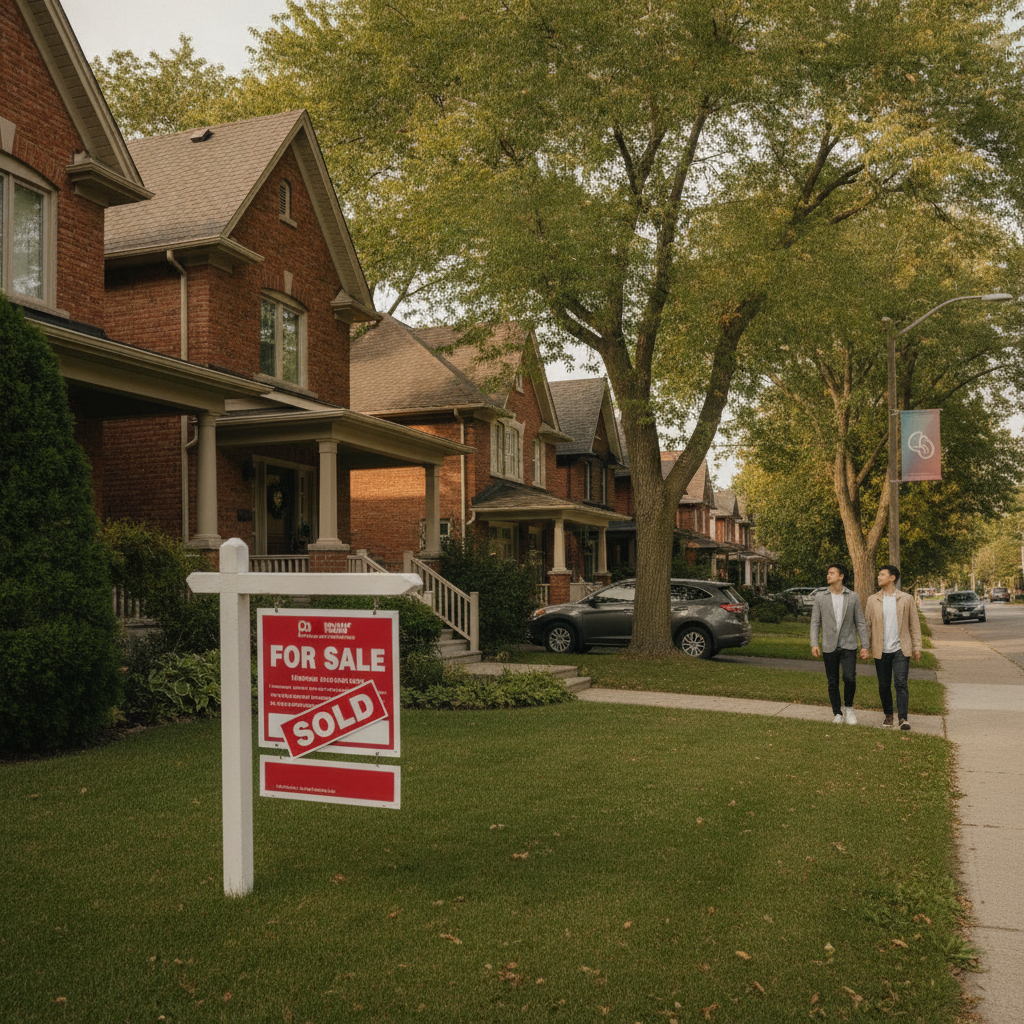
Ontario has moved out of buyers' market territory, according to CREA's national MLS® stats for July released on August 18. National home sales rose 0.5% month over month, the fourth straight monthly gain, while new listings fell 1.6%, the third decline in a row, tightening the national sales-to-new-listings ratio to 51.3%, a level CREA considers consistent with balanced conditions. For Ontario specifically, CREA noted the province spent the first four months of 2026 in buyers' market territory but by July its inventory had eased back to only modestly above its long-term average, putting it close to balanced.
If you've been sitting on a listing decision, or waiting for the "right moment" to buy, this is worth five minutes of your attention. Buried in CREA's release is a line that matters a lot more to people in Burlington, Hamilton and Niagara than it does to the country as a whole, and it's worth understanding what's actually behind it before you make a move.
What CREA actually reported
National home sales rose 0.5% month over month in July, the fourth straight monthly gain. That's not a spike. It's a slow, steady climb that's been building since spring.
On price, the national MLS® Home Price Index ticked up just 0.1% month over month but sits 3.3% below where it was a year ago. Meanwhile the actual, non-seasonally-adjusted national average sale price was $674,819 in July, up 0.2% year over year. Two different measures, two slightly different stories, which is normal and part of why headlines about "prices" can be misleading if you only read one number.
The more telling detail is on the supply side. New listings dropped 1.6% month over month, the third decline in a row. With sales up and listings down, the national sales-to-new-listings ratio tightened to 51.3%. CREA considers anything between roughly 45% and 65% consistent with balanced conditions. That number used to sit closer to buyers' market territory earlier this year. It's moved.
National inventory came in at 4.7 months at the end of July, the lowest reading so far in 2026 and just below the long-term average of 5 months. Inventory has been draining a little every month since spring, not dramatically, but consistently.
Why this is a bigger deal in the Golden Horseshoe than elsewhere
Here's the part that actually applies to us. CREA specifically flagged Ontario as having spent the first four months of 2026 in buyers' market conditions. That tracked with what a lot of local sellers felt this winter: longer days on market, more negotiating room, buyers taking their time.
By July, CREA noted Ontario's inventory had eased back to only modestly above its long-term average, putting the province close to balanced. That's a real shift in a short window. It doesn't mean Burlington or Hamilton flipped into a seller's market overnight. It means the extreme buyer leverage that showed up earlier this year is fading. If you want to see how that's actually showing up on the ground, our market reports for all 26 areas break down monthly sales, prices and days on market by neighbourhood.
CREA's senior economist summed up the national mood plainly: "July's housing data was a carbon copy of the June numbers, with home sales edging up a little further, listings down, and prices remaining stable." Stable and quietly tightening is a very different environment than falling.
What this means if you're selling in Burlington or Hamilton this fall
A tightening sales-to-new-listings ratio usually shows up locally as fewer price reductions and slightly faster offers on well-priced homes. It doesn't mean you can price aggressively and expect a bidding war. It means the penalty for overpricing is smaller than it was in February, and the penalty for underpricing (leaving money on the table) is starting to grow again.
This is exactly the kind of shift that gets missed if you're going off a Zillow-style estimate or a number a neighbour quoted you from last year. If you're weighing whether now is the moment to list, run a proper instant home evaluation using current local data rather than a national headline. National trends set the tone, but the actual number your home commands depends on your street, your comparables, and how many other listings are competing for the same buyer this month.
We've written before about the gap between simply being on the market versus actually being in the market — this CREA data is a good example of why that distinction matters more when conditions are shifting, not less.
What this means if you're buying
Buyers who've been waiting for Ontario's earlier buyers' market conditions to hand them extra leverage should read the July numbers carefully. That window is narrowing, not widening. Four straight months of rising sales combined with three straight months of falling new listings is not a pattern that favours waiting indefinitely.
That said, 4.7 months of national inventory is still slightly below the long-term average of 5, not dramatically below it. This isn't 2021. There's no need to panic-buy. But it's a reasonable moment to stop assuming next spring will automatically be easier or cheaper than right now. Conditions that are drifting toward balanced can drift toward tight just as easily if listings keep shrinking.
First-time buyers weighing a Hamilton starter home or a Burlington townhouse should treat this as a nudge to get pre-approved and start seriously looking, rather than a signal to rush into an offer out of fear. If you want a plain, no-pressure read on what these numbers mean for a specific property type or neighbourhood you're watching, that's a conversation worth having before you're up against a competing offer.
The number that actually matters for investors
If you're eyeing a multi-unit property in Hamilton, the price detail is more useful than the sales volume detail. A national HPI down 3.3% year over year, paired with an actual average sale price up slightly, tells you prices have mostly stopped falling but haven't started climbing in a way that changes the math on cash flow. That's a decent window for investors who do the math properly rather than assuming appreciation will bail out a weak cap rate. We've dug into how Hamilton investors misjudge monthly cash flow in more detail elsewhere, and this CREA data reinforces the same lesson: price stability is not the same thing as guaranteed upside.
The takeaway: Ontario spent early 2026 favouring buyers, but CREA's July data shows that edge fading fast, national sales rising for a fourth month straight while listings shrink for a third. Neither side of the table gets to assume the old rules still apply.
What's next
CREA's next stats package lands September 15. If the pattern holds, sellers who were told to wait for the market to "come back" will have less reason to keep waiting, and buyers who assumed they had all the time in the world may find that window closing quietly rather than dramatically.
Let's Talk Through Your Numbers
National stats are a starting point, not a decision. Whether you're weighing a fall listing in Burlington, a Hamilton investment purchase, or a Niagara move, the right move depends on what's happening on your specific street this month. Book a call with the Found Spaces team and we'll walk through what these shifts actually mean for your situation, no pressure, just the real numbers.