On September 2, 2026, the Bank of Canada held its target overnight rate at 2.25%. The Bank Rate stayed at 2.5% and the deposit rate at 2.20%. That's seven holds in a row. If you've been waiting for a rate cut before you buy, renew, or list your house, you just got another quiet no.
Here's the part worth paying attention to. This wasn't a boring, nothing-to-see-here hold. The Bank flagged something specific: upside risk to inflation. That's a different story than the one we were telling ourselves a year ago.
Why the Bank held instead of cutting
The economy is actually doing fine on paper. GDP grew 3.3% in the second quarter of 2026, and unemployment edged down to 6.4% in July. Normally that kind of resilience would make a central bank comfortable moving rates lower. Instead, the Bank stayed put because of what's happening on the inflation side.
US tariffs, Canadian counter-tariffs, and elevated oil prices are pushing costs up in a way the Bank can't ignore. Canada's Consumer Price Index has been sitting around 3%, mostly because of gasoline prices, even though core inflation is closer to the 2% target. When the headline number and the core number pull apart like that, a central bank gets cautious. They'd rather hold steady and watch than cut and get surprised.
For Burlington, Hamilton, and Niagara buyers, that caution matters more than any single number. It tells you the Bank is worried about the wrong kind of inflation coming back, the kind driven by trade friction and energy prices, not demand. That's harder to fix with a rate cut anyway.
What this actually means for a mortgage renewal
If your mortgage is coming up for renewal in Hamilton or Burlington this fall, don't plan around a rate drop that isn't coming. Seven consecutive holds is the Bank telling you, plainly, that borrowing costs are staying roughly where they are until something changes.
A practical example. Say you locked in a five-year fixed rate back in 2021 near historic lows. Renewing now means adjusting to a materially different rate environment, regardless of what happens at the next announcement. That gap is real for a lot of homeowners across Niagara and Hamilton right now, and it's worth running the numbers with your lender well before your renewal date, not the week of.
Variable rate holders aren't getting relief either. With the Bank on pause and flagging inflation risk rather than growth risk, there's no obvious signal pushing variable rates down soon. If anything, the tone suggests rates are more likely to creep up than down before they come down meaningfully.
Fixed or variable right now
This is the question we get asked constantly, and the honest answer is that the Bank's own language should shape your decision. When the concern is inflation risk from tariffs and oil, not economic weakness, that usually favours locking in certainty over betting on a cut. A fixed rate protects you from the scenario where inflation surprises to the upside and the Bank has to hold longer, or even nudge higher, than anyone expects.
That said, everyone's timeline is different. If you're planning to sell or refinance within two or three years, a shorter fixed term or a variable option might still make sense depending on your penalty structure. This isn't one-size-fits-all advice, it's a conversation worth having with a mortgage professional who knows your specific numbers.
What this means if you're selling this fall
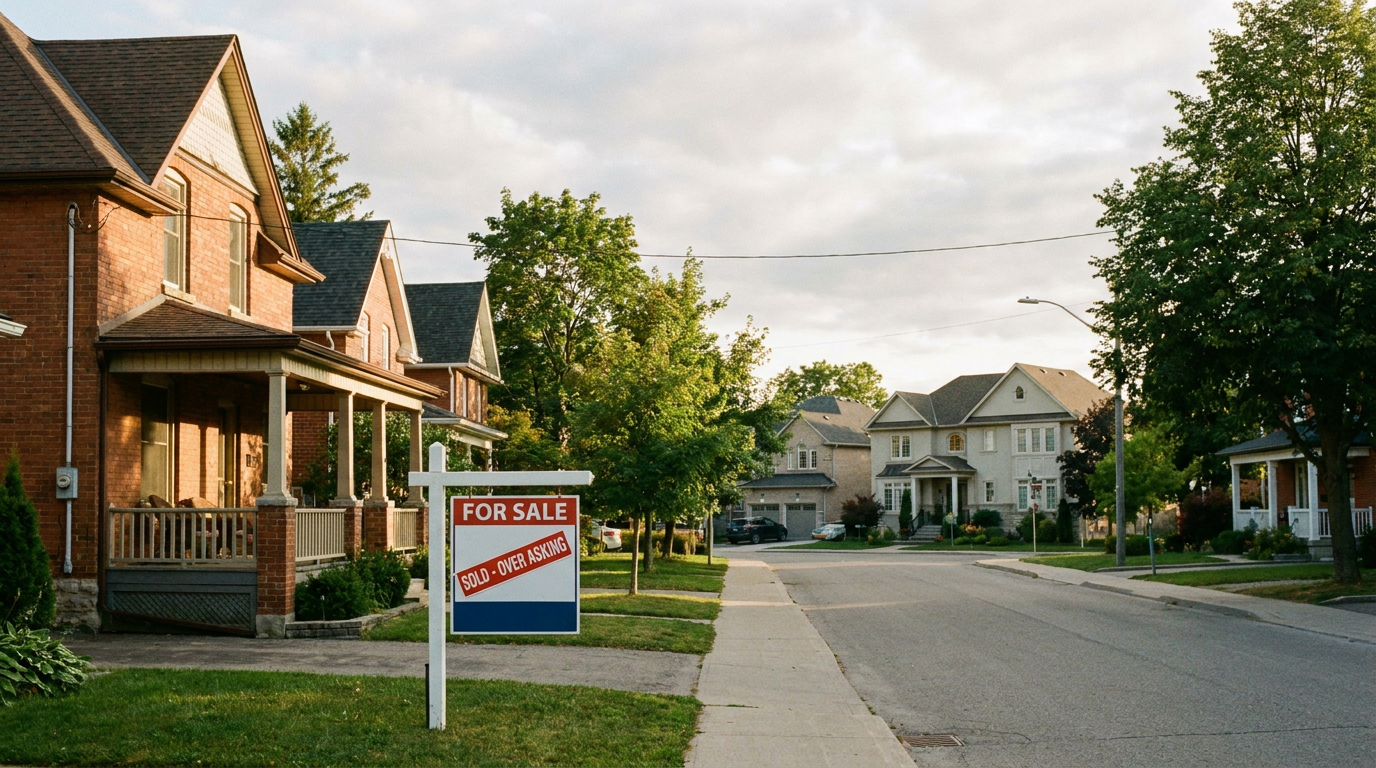
Steady rates cut both ways for sellers. On one hand, buyers aren't spooked by rising costs the way they were during the hiking cycle. On the other, buyers also aren't getting any extra purchasing power from a rate drop, so affordability stays tight and price sensitivity stays high.
If you're weighing whether to list a home in Burlington or Hamilton this fall, understanding exactly where your equity and mortgage position stand matters more in a flat-rate environment, not less. A free instant home evaluation gives you a real, current number to plan around instead of guessing.
Mark October 28 on your calendar
The next scheduled rate announcement is October 28, 2026, alongside a fresh Monetary Policy Report. That's the next real checkpoint for anyone timing a purchase, renewal, or listing around borrowing costs. Between now and then, expect fixed and variable mortgage rates in Ontario to hold roughly steady, maybe drift slightly higher if oil prices or tariff tensions escalate.
If you're weighing your options in the meantime, our post on Southern Ontario's fall inventory glut breaks down what steady rates mean for negotiating power right now, and our look at the 30-year mortgage's return covers another lever buyers in Niagara and Hamilton are using to manage costs.
The takeaway: seven holds in a row isn't a sign rates are about to fall, it's a sign the Bank of Canada is more worried about inflation than growth. Plan your renewal, purchase, or listing around the rate environment you actually have, not the one you're hoping for.
Let's talk about your specific numbers
Rate news is easy to read and hard to apply to your actual situation. If you want to talk through what this hold means for your renewal, your next purchase, or your listing plans in Burlington, Hamilton, or Niagara, book a call with our team and we'll walk through it together.


