
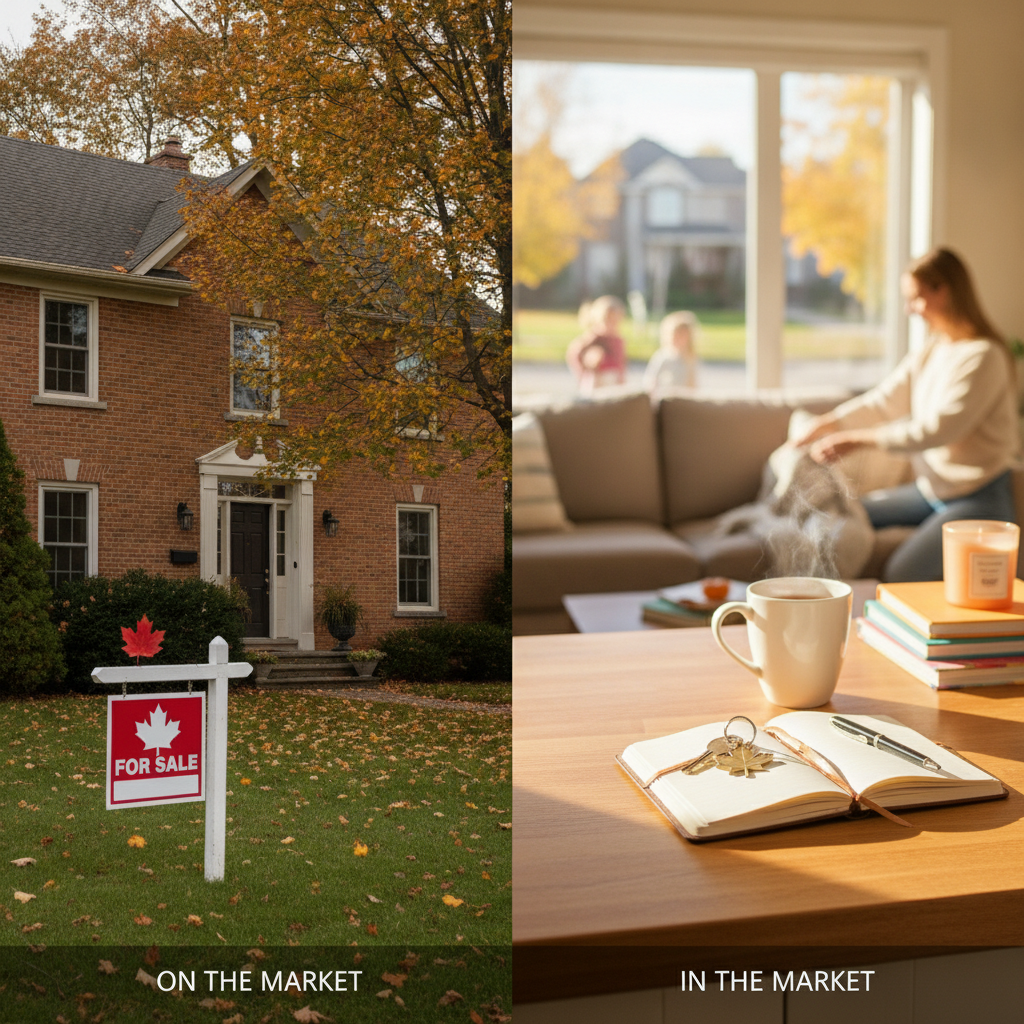
Being on the market means your home is simply listed and visible. Being in the market means it's actually priced where real buyer demand exists, getting showings, offers and attention. The difference decides whether a listing sells in weeks or sits for months, and it comes down almost entirely to price.
A house on a quiet street in Hamilton sits with a for sale sign out front for six weeks. No showings this week. Meanwhile, two doors down, a similar home sold in nine days. Same neighbourhood. Same season. Different result.
That gap is not luck. It's the difference between being on the market and being in the market.
Two Markets, Same Street
Here's the idea. At any given time, there are really two markets running side by side. One is the market of homes that are simply listed, sitting on Realtor.ca, waiting. The other is the market of homes that are actually getting showings, offers, and real buyer attention.
Most sellers assume listing their home puts them in that second group automatically. It doesn't. You can have a sign on the lawn and a listing live for months and never once be in the market where real demand is happening.
This matters more right now because fall is bringing a wave of new listings across Burlington, Hamilton and Niagara. When more homes hit the market at once, buyers get choosy. They compare. They skip the ones priced like it's still spring.
Why Fall Changes the Math
We've watched this trend build through all of August. Sellers who held off during summer are getting ready to list now, and a lot of new inventory is expected to land in the next couple of weeks. More competition for sellers, more options for buyers.
That shifts the leverage. In a market with fewer listings, almost any price gets some attention because buyers don't have much else to look at. In a market with growing supply, buyers can afford to wait out a home that's priced even a little high. They just move to the next one.
This is exactly the kind of market where pricing accurately, right from day one, decides whether you sell in three weeks or three months.
The Price That Actually Gets You In
Being in the market means pricing at a point where real demand exists for your type of home in your specific area. That number is not the same for a semi in east Hamilton as it is for a detached home in old Burlington. It changes street by street.
The mistake we see constantly is sellers pricing to what they hope the home is worth, or to what a neighbour's home sold for eight months ago, back when there were three buyers for every listing. That comparison no longer holds. If you're not sure where the real demand line sits for your property, book your instant home evaluation and get a current read before you set a number.
Pricing right isn't giving up value. It's what actually protects your value, because a home that sits too long starts chasing the market down instead of leading it.
When Your Home Has a Real Stigma
Some homes carry a built-in disadvantage that comps don't fully capture. A backyard on a highway. A lot next to train tracks. A busy arterial road out front. No usable yard space at all.
In a market with lots of buyer options, these features become dealbreakers, not just minor negatives. Buyers who have five other homes to choose from won't fight for the one with the highway noise. That means these properties often need to price below what the raw comparables suggest, not at them.
This is a tough thing for a lot of sellers to accept. But pricing around a known stigma, rather than hoping buyers will overlook it, is what actually gets these homes sold instead of sitting for months. We walked through exactly this kind of pricing pressure in our post on why the best neighbourhoods are moving first this fall, where location and timing decided who got offers and who didn't.
Buyers Already Know About Your DIY Reno
Here's something sellers underestimate. When the market is hot and options are scarce, buyers overlook a lot. A quick paint job, a laminate counter pretending to be quartz, none of it matters much when there's nothing else to buy.
When the market slows and buyers have choices, they get picky. They notice the cheap vanity. They notice the flooring that doesn't quite meet the wall properly. And because they have other homes to compare against, they'll use those details to negotiate the price down, sometimes harder than the flaw actually justifies.
The fix isn't necessarily a full renovation before you sell. It's pricing with the expectation that a discerning buyer will find the shortcuts, and getting ahead of that conversation rather than being surprised by a lowball offer.
What Being In the Market Looks Like Locally
In Hamilton, that often means understanding what investors and end users are actually paying for turnkey versus fixer-upper properties right now, something we track closely on our Hamilton investment properties page. In Burlington's higher-end pockets, buyers at that price point are more selective, not less, and finish quality gets scrutinized hard, which you can see reflected in our Burlington luxury homes listings.
Across all three areas, the pattern holds. At almost every price point, there's real buyer demand right now. The homes that aren't selling are almost always priced outside where that demand actually sits, not because buyers vanished.
The takeaway: listing your home and being in the market where real demand exists are two different things, and only accurate pricing bridges that gap.
Let's Talk Before You List
If you're planning a fall listing in Burlington, Hamilton or Niagara, the price you choose in the first two weeks matters more than almost anything else you'll decide. Get a clear, current read on where your home actually sits with an instant home evaluation, and if you want to talk through the specifics of your street, your stigma factors, or your finishes, reach out and book a call. You can also browse more of our thinking on the fall market over on our blog.